Quality Inspections: Digitise Checklists and Capture Results on the Floor
Paper inspection checklists get lost, filled in late, and never feed useful analytics. By the time you read them, a failed check may already be packed, shipped, or sitting in front of a retail auditor.
We build digital inspections that capture quality data at the line and alert you the moment something fails.
Sound Familiar?
These are the exact issues plant and quality supervisors bring us before we digitise their checks:
- Paper checklists go missing on the line, get stained, or sit in a folder until Friday
- Inspectors fill forms late, so quality data is already hours out of date when you see it
- Failed checks are found only after the next shift has already packed or shipped
- Retail and food-safety audits stall while your team digs through binders for incomplete records
- You cannot trend defect rates by line, shift, or product because results never leave the clipboard
Retail and food-safety auditors still expect complete CCP and finished-goods records on demand. Incomplete paper trails are a common audit finding under HACCP and FSMA-style programmes, and food plants that scramble for binders can burn the equivalent of millions of rand a year in failed audits, corrective programmes, and lost shelf space.
What Digital Inspections Actually Do
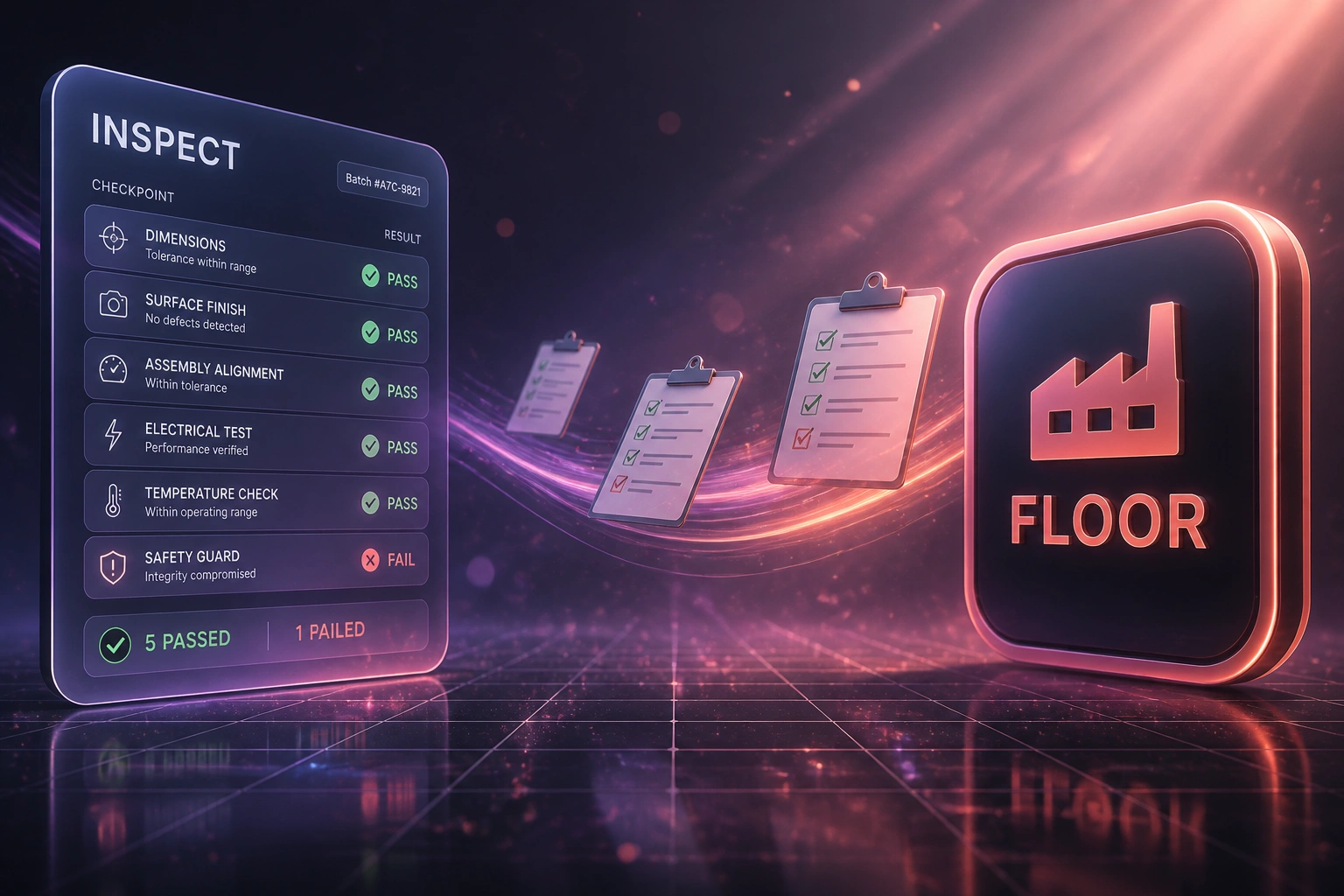
Check starts on the floor → result is captured → fail alerts fire → you see live quality data. No clipboard chasing.
Inspector Opens the Check
Tablet or phone shows today's checklist for that line, batch, or CCP
Results Captured Live
Pass/fail, measurements, barcodes, and photos stored with time and user
Failures Alert Immediately
Supervisor gets notified; hold or rework can start before the next batch ships
Live Quality Picture
Dashboards show trends by line and shift; audit packs export in minutes
Everything You Need for Floor-Level Digital Inspections
Mobile Inspection Checklists
Your existing paper forms become tablet and phone checklists on the floor. Mandatory fields, photo evidence, and barcodes stop incomplete submissions.
Pass / Fail Instant Alerts
Out-of-spec answers trigger WhatsApp, SMS, or email alerts to the quality supervisor before the next batch moves. No waiting for end-of-shift paperwork.
Real-Time Quality Data
Every completed check lands on a live dashboard by line, shift, and product. You see first-pass yield and fail rates as the day unfolds.
Audit-Ready Trail
Timestamps, inspector ID, photos, and results are stored and searchable. Pull an FSMA, HACCP, or retail audit pack in minutes instead of hours.
Offline Floor Capture
Inspections keep working when the plant Wi-Fi drops. Results queue on the device and sync the moment connectivity returns.
Escalation on Failure
Failed checks open a simple hold or rework task with an owner and due time. The floor stops guessing who must act next.
What Fits Around Your Floor
From 19 Minutes a Check to 6
How a Gauteng food plant replaced paper inspection checklists, cut floor time by two-thirds, and stopped losing quality data between shifts.
The Paper Process
- Six line inspectors carried clipboards that often stayed on the floor until end of shift
- Average 19 minutes per inspection including form fetch, handwriting, and later re-keying
- Quality supervisor spent 8 hours a week chasing missing sheets and correcting unclear ticks
- Failed metal-detect and hygiene checks sometimes surfaced after packing had already started
- A retail audit flagged incomplete CCP records that took two days to reconstruct from binders
The Digital Process
- Inspectors complete the same checks on rugged tablets at the line
- Average inspection time fell to about 6 minutes with mandatory fields and photo prompts
- Supervisor reviews open fails on a phone dashboard instead of hunting for paper
- Fail alerts land on WhatsApp within seconds so holds start before the next batch
- Audit packs for any date range export complete, time-stamped records in minutes
Before vs After Digital Inspections
How It Works
From first conversation to live digital inspections in 2–4 weeks.
Map Your Checks
We walk your lines, list every inspection checklist, and note where failures must stop production.
Free Scoping Call
30-minute call to confirm devices, alert rules, audit needs, and which checks to digitise first.
Build & Pilot
We digitise your forms, train one shift, and run paper in parallel for a week to prove speed and completeness.
Go Live & Monitor
Paper binders retire. Live dashboards and fail alerts stay on, with tuning as you add lines.
Frequently Asked Questions
How long does a digital quality inspection system take to set up?
Most plants go live in 2–4 weeks. We start with your highest-volume checklists so inspectors feel the time saving on day one, then roll out the rest of the forms.
Is this the same as a full quality management system or computer vision?
No. This page is about digitising floor-level inspection checklists: mobile capture, pass/fail alerts, and live quality data. A full QMS manages NCRs and CAPA programmes. Computer vision uses cameras to detect defects. We can connect those later if you need them.
Will inspectors need long training?
Usually not. The interface mirrors the paper forms they already know, with large pass/fail controls and photo prompts. Most teams are productive after a single shift of coaching.
What if the factory floor has poor Wi-Fi?
Inspections run offline. Results and photos store on the device and sync automatically when the signal returns, so you do not lose quality data during a drop-out.
How does this help with HACCP, FSMA, or retail audits?
Every check is time-stamped with inspector identity and optional photo evidence. When an auditor asks for CCP or finished-goods records, you export a complete pack in minutes instead of reconstructing paper trails under pressure.
How much does a digital inspection system cost?
Typical builds for South African plants run from about R20,000 to R50,000, depending on the number of checklists, alert rules, and integrations. Plants running dozens of inspections a day usually see payback within a few months from staff time and earlier defect catch.
Stop Running Quality on Clipboards
If your plant still captures inspections on paper, you are paying for lost sheets, late alerts, and audits that feel like a scramble.
Tell us how many lines you run, which checks matter most, and what your last audit felt like. We will show you how a digital inspection system would work on your floor, typically from R20,000 to R50,000 depending on scope.