Real-Time Field Worker Location Tracking: See Who Is Closest Now
Without live GPS fleet tracking, dispatchers guess who is nearest, customers get wrong ETAs, and lone-worker safety stays blind. Dispatch managers and field service CEOs feel it as wasted kilometres, angry waiting rooms, and silent vans on remote jobs.
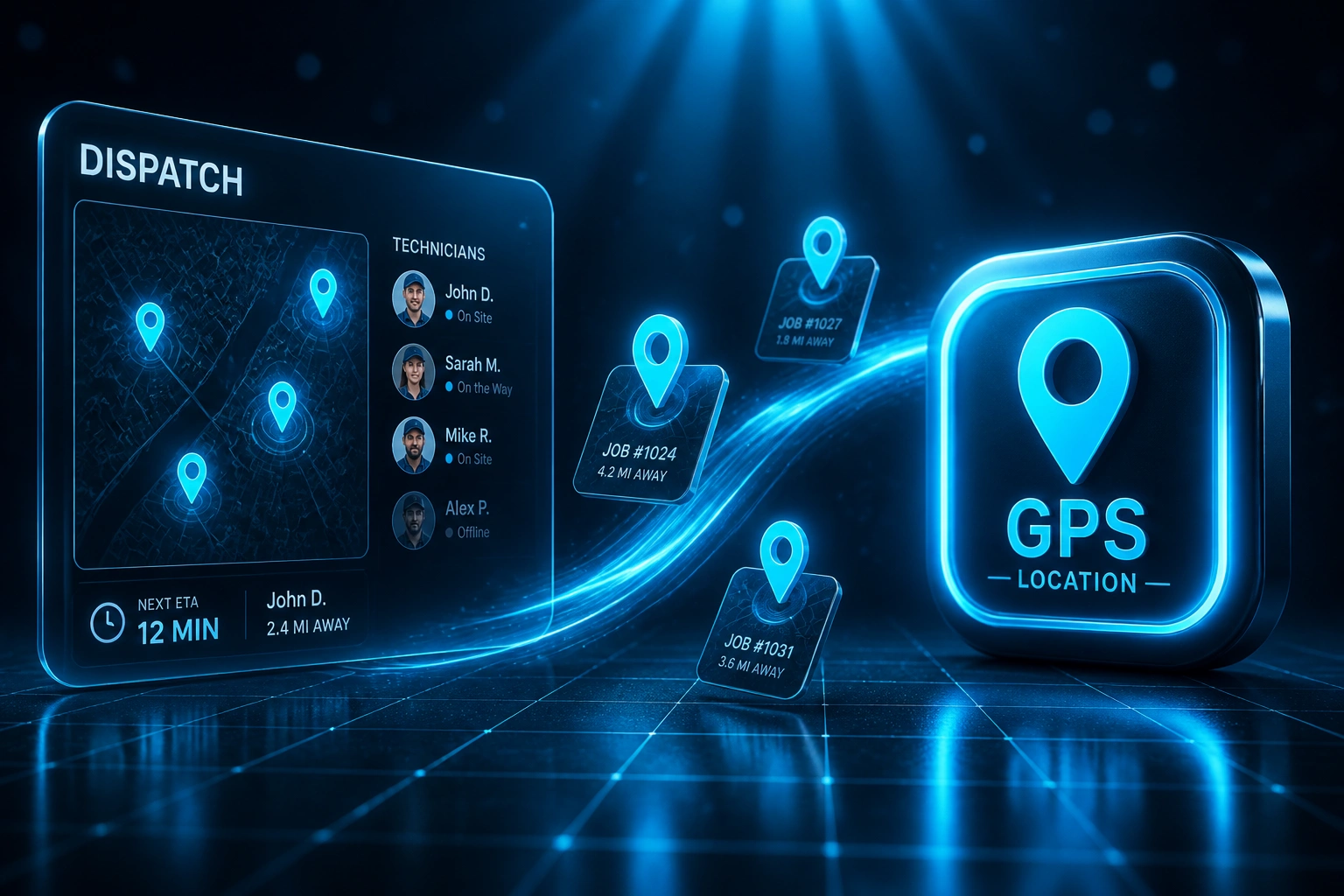
We build real-time location tracking that turns the map into your dispatch board.
Sound Familiar?
These are the exact issues our clients faced before live GPS dispatch:
- Dispatchers guess who is closest from a last WhatsApp check-in, then send the wrong technician across town
- Customers get vague all-day windows because nobody can give a live ETA from real movement
- "Where is my technician?" calls flood the office every afternoon while the board stays blind
- Lone workers go silent on remote sites and nobody knows whether they are delayed, lost, or in trouble
- Fuel and idle travel climb because routes are planned from yesterday's assumption, not today's map
Inland 95 petrol sits near R25.58/L as of August 2026, while customers increasingly expect live ETAs. Blind dispatch burns fuel you cannot reclaim and erodes trust you cannot buy back with a better brochure.
What Real-Time Location Tracking Actually Does
Job opens → nearest free tech assigned → customer gets a live ETA → arrival and safety status stay visible.
Job Hits the Board
A new call, SLA breach, or urgent recall lands in your job board or CRM
Closest Tech Surfaced
Live GPS shows who is nearest, free, and skilled enough for first-available assignment
Customer Gets a Live ETA
"Technician on the way" updates recalculate from real movement, not a static window
Safety Stays Visible
Check-ins, SOS, and last-known location keep lone workers on the radar until they clear site
Everything You Need for Live GPS Fleet Tracking
Live Dispatch Map
Every field worker appears on a single map with status, last update, and proximity to open jobs so dispatchers assign from reality, not memory.
First-Available Assignment
When a new call lands, the system surfaces who is nearest and free, with skills and SLA priority, so idle travel is cut before the van moves.
Customer ETA Feeds
Accurate "technician on the way" updates go out by SMS or WhatsApp from live GPS movement, not a static schedule guess.
Lone-Worker Safety Layer
Timed check-ins, SOS alerts, and last-known location give supervisors a response path when someone goes dark on a remote job.
POPIA-Aware Tracking Policy
Location is purpose-limited to dispatch, ETA, and safety. Retention windows and worker notices are designed in, not bolted on later.
Job and Fleet Write-Back
Live positions and arrival events sync into your job board, FSM, or CRM so status, ETAs, and history stay in one place.
Platforms We've Connected for Live Location
From Blind Dispatch to a Live Map
How a 14-technician Gauteng HVAC firm cut travel kilometres 28%, dropped ETA chase calls 30%, and recovered R186K in fuel and idle time in year one.
The Blind Process
- Dispatchers assigned from last WhatsApp ping and who "felt" free
- Technicians spent roughly a third of each shift in windshield time
- Customers got 4–6 hour windows with no mid-journey update
- Office fielded constant "where is my technician?" calls every afternoon
- Lone workers on industrial estates had no SOS or last-known location path
The Live Process
- Open jobs surface the nearest free, skilled technician on a live map
- Average daily kilometres per tech fell about 28% within 90 days
- Customers receive "technician on the way" updates from real movement
- ETA chase calls dropped about 30% as the board stopped guessing
- Timed check-ins and SOS give supervisors a response path for lone workers
Before vs After Real-Time Location Tracking
How It Works
From first conversation to live GPS dispatch in 2–4 weeks.
Tell Us Your Setup
How many technicians, which job board you run, where ETA and safety pain hurts most, and what POPIA notice you already give crews.
Free Scoping Call
30-minute call to map devices → live location → dispatch rules → customer ETA → lone-worker alerts for your field operation.
Build & Test
We wire GPS feeds, proximity dispatch, ETA messages, and safety check-ins, then run parallel against your current board for two weeks.
Go Live & Monitor
Switch off blind dispatch. Monitoring watches stale pings, missed check-ins, and ETA drift before customers notice.
Frequently Asked Questions
How long does real-time field worker location tracking take to set up?
A standard live GPS dispatch build with proximity assignment, customer ETA messages, and basic lone-worker check-ins takes 2–4 weeks from scoping to go-live. Single-region fleets with smartphones already in the field can be live in about two weeks. Multi-region builds with custom job-board write-back, skills matching, and fuller safety escalation typically take 4–6 weeks.
Is this the same as GPS clock-in or geofenced timesheets?
No. Clock-in geofencing proves someone punched at a site for payroll. Real-time location tracking is about live dispatch visibility, accurate customer ETAs, and lone-worker safety while jobs are in progress. Many clients eventually want both, but they solve different problems and should be scoped as such.
How do you stay POPIA-compliant with continuous GPS?
We treat location as purpose-limited personal information. Tracking runs during working hours for dispatch, ETA, and safety only. Workers get a clear notice, retention is limited, access is role-based, and after-hours tracking is off by default. That is far easier to defend than silent always-on stalking.
Which field service and messaging tools can you connect?
We have connected live location into Jobber, ServiceTitan, Salesforce Field Service, Dynamics 365 Field Service, Connecteam, custom job boards, and WhatsApp or SMS ETA channels. If your dispatch still lives in spreadsheets and group chats, we can start there and harden the live map before deeper write-back.
Will field crews reject being tracked?
Resistance usually comes from surprise continuous tracking with no explained benefit. Done well, crews see fairer job allocation, fewer "are you nearly there?" calls from the office, and a real safety net when they work alone. We recommend a transparent policy, shift-only tracking, and supervisor access limited to people who need it.
How much does real-time location tracking for dispatch cost?
A focused live map with proximity dispatch and customer ETA messaging starts from around R35,000. Builds with multi-region fleets, job-board write-back, and lone-worker safety escalation typically range from R50,000 to R90,000. Clients recovering even a fraction of wasted travel and ETA chase calls usually see ROI within two to four months.
Stop Dispatching Blind
If your dispatchers still guess who is closest, your customers still wait in the dark, and your lone workers still go silent without a pin on a map, you are paying for a problem that live GPS already solves.
Tell us how many technicians you run, which job board you use, and whether ETA accuracy or safety is the sharper pain. We will show you exactly how real-time location tracking would work for your field operation.