REST API Data Extraction Pipeline: Replace Weekly CSV Exports for Good
Your ops and finance leads still log into HubSpot, Shopify, Xero, and Stripe every week to export CSVs. Overnight jobs die on rate limits, pagination gaps hide records, and reporting is always a few days stale.
We build the api data extraction pipeline that survives throttling, finishes every page, and lands fresh data in your warehouse.
Sound Familiar?
These are the exact issues ops and finance teams bring us before a durable rest api pipeline:
- Every Monday starts with logging into HubSpot, Shopify, Xero, and Stripe to export CSVs by hand
- Overnight jobs fail silently when a platform throttles requests, and nobody notices until the board pack is wrong
- Pagination gaps mean last week's orders or invoices never make it into the warehouse
- Finance and ops argue over whose export is current because each tool was pulled at a different time
- As you add another SaaS tool, the CSV ritual grows by another hour every week
Fragile overnight jobs are a silent tax. Large enterprises see roughly 4.7 pipeline failures a month and nearly 13 hours to recover each one. DIY scripts fail 30 to 47% more often than managed approaches. If your Monday pack depends on a weekend pull, one rate-limit bug can wipe the week.
What API Data Ingestion Actually Does
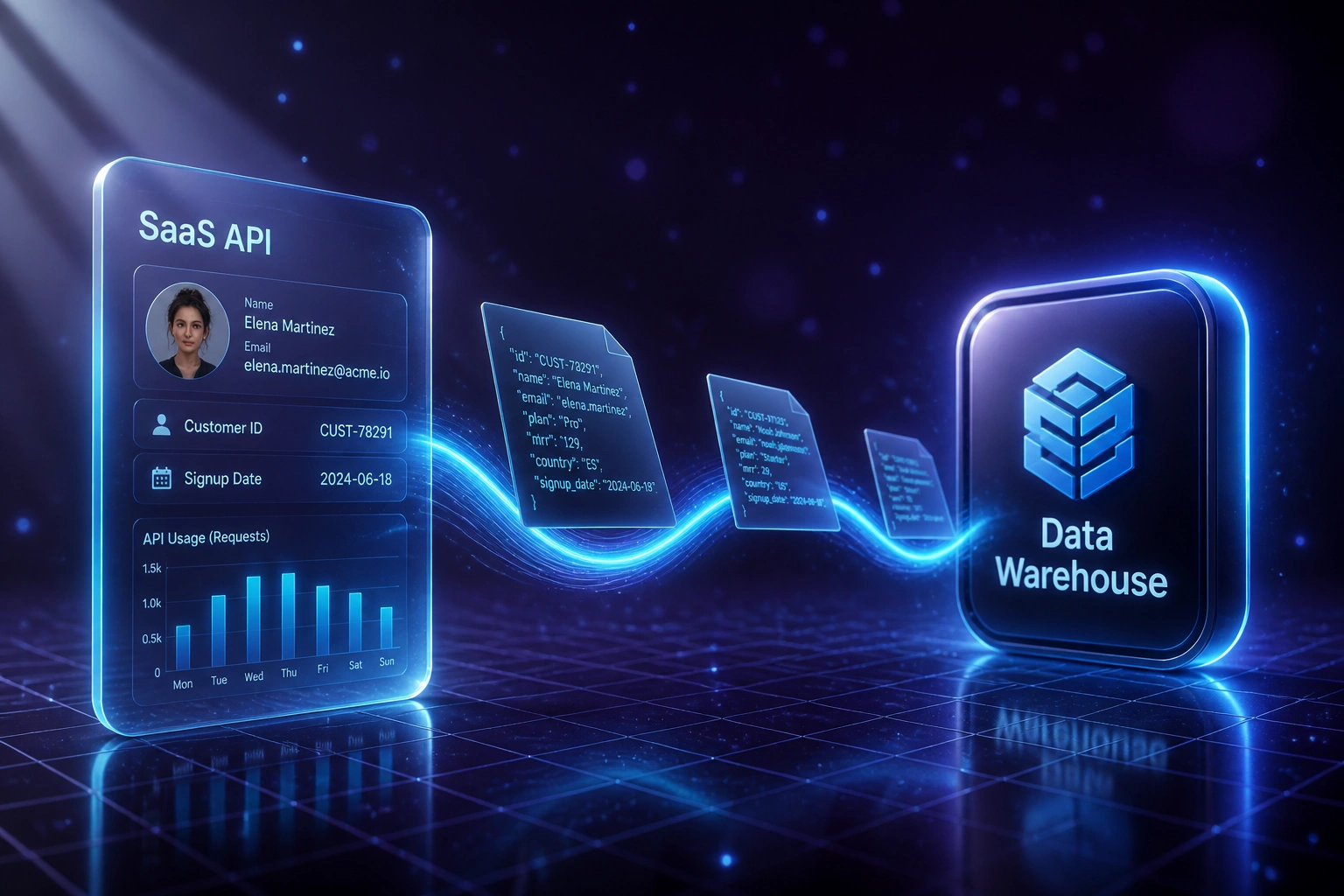
SaaS platforms update → pipeline extracts → warehouse loads → reporting stays current. Nobody downloads a CSV.
Sources Update
Orders, contacts, invoices, and payments change across HubSpot, Shopify, Xero, Stripe
Pipeline Extracts
Scheduled job walks every page, respects rate limits, and pulls only what changed
Warehouse Loads
Clean records land in your database or warehouse with load timestamps and run history
Reporting Stays Fresh
Board packs and ops dashboards refresh from one source instead of four CSV folders
Everything You Need for Reliable API Data Extraction
Scheduled API Extraction
HubSpot, Shopify, Xero, Stripe, and similar platforms pull on a schedule into your warehouse or operational database. No more Friday afternoon export marathons.
Pagination That Finishes
Large record sets are walked page by page until the last record lands. Incomplete pulls that drop the final batch of orders stop being a monthly surprise.
Rate-Limit Resilience
When a platform slows you down, the pipeline backs off, waits, and resumes. Overnight jobs survive throttling instead of dying halfway through.
Incremental Fetching
Only new and changed records move after the first full load. Cursor-based and since-last-run pulls keep API usage lean and reporting fresh.
Retry and Alerting
Transient failures retry automatically. Persistent failures alert ops before the Monday pack goes out on stale numbers.
Warehouse-Ready Loads
Clean, typed records land in Postgres, BigQuery, SQL Server, or your reporting store so dashboards finally match the tools your team already trusts.
Platforms We've Built Extraction From
From 14 Hours/Week to 90 Minutes
How a Johannesburg multi-channel retailer stopped stitching HubSpot, Shopify, Xero, and Stripe CSVs by hand and got overnight warehouse data they could trust.
The Manual Process
- Ops lead exported CSVs from four SaaS tools every Monday and Thursday
- Two to three hours cleaning date formats, IDs, and duplicate rows in Excel
- A homemade overnight script failed twice a month when Shopify throttled
- Board packs were always three to five days behind live trading
- Finance and marketing argued over which export was "the real one"
The Automated Process
- Scheduled REST extraction pulls each platform into one warehouse every night
- Pagination, rate-limit backoff, and incremental fetches run without babysitting
- Failed runs alert WhatsApp before anyone opens a dashboard
- Same-morning reporting from one trusted store of records
- Ops reviews exceptions for 90 minutes a week instead of rebuilding files
Before vs After a REST API Pipeline
How It Works
From first conversation to live extraction in 3 to 5 weeks for a focused source set.
List Your Sources
Which SaaS tools you export from today, where the data should land, and which reports break when a pull fails.
Free Scoping Call
30-minute call to map volumes, refresh cadence, and which rest api pipeline pays back first.
Build and Parallel Run
We build the extraction jobs, compare against your CSV exports for a week, and prove the warehouse matches before you switch off the ritual.
Go Live with Monitoring
Scheduled pulls replace manual exports. Alerts fire when rate limits, auth expiry, or incomplete pages need attention.
Frequently Asked Questions
What is a REST API data extraction pipeline?
It is a scheduled process that pulls records directly from SaaS platforms (CRM, ecommerce, accounting, payments) into a warehouse or database. Unlike CSV exports, it handles large result sets in pages, respects platform speed limits, fetches only what changed since the last run, and retries when something fails overnight.
How is this different from exporting CSVs every week?
CSV exports depend on someone remembering to log in, pick the right date range, and paste the file somewhere useful. An api data extraction pipeline runs unattended, keeps a complete history of what loaded when, and lands typed records ready for reporting. The ritual becomes a monitored job instead of tribal knowledge.
Which platforms can you extract from?
We regularly build extraction from HubSpot, Shopify, Xero, Stripe, Salesforce, QuickBooks, WooCommerce, and other SaaS tools that expose a modern API. If your ops team already exports CSVs from a platform, we can almost always replace that with a durable rest api pipeline.
What happens when a platform rate-limits or changes its API?
The pipeline backs off and resumes when throttled, and failed runs alert your team instead of failing silently. When a platform changes fields or auth, monitoring surfaces the break quickly so we can adjust the mapping before board reporting relies on empty tables.
How long does an API data ingestion pipeline take to build?
A focused pipeline for two or three core sources typically takes 3 to 5 weeks from scoping to live schedule. Multi-source packs with incremental keys, warehouse modelling, and parallel validation against existing CSVs can take 5 to 8 weeks.
How much does a REST API extraction pipeline cost?
Durable api data ingestion with pagination, rate-limit handling, and monitoring typically starts around R45,000. Multi-source pipelines with incremental loads and warehouse modelling usually land between R60,000 and R120,000. Most ops and finance teams recover that inside 2 to 4 months against the hours currently spent on CSV exports and broken overnight jobs.
Stop Wasting Mondays on SaaS CSV Exports
If ops and finance are still downloading files from every tool you run, you are paying a recurring tax that a durable rest api pipeline already solves.
Tell us which platforms you export from, where reporting should land, and which overnight job keeps failing. We will show you exactly how automated api data ingestion would work for your business.