SA Bank Statement Reconciliation: Matching Transactions to Your Records
Every month your bookkeeper, controller, or CFO re-ticks FNB, Standard Bank, Absa, and Nedbank lines against the cash book. Statement matching eats days of close, hides uncleared and duplicate payments, and delays the cash figure the business actually needs.
We automate statement matching and flag the exceptions early.
Sound Familiar?
These are the exact issues our SA finance clients faced before statement matching automation:
- Month-end bank reconciliation eats 8 to 15 hours per account while the rest of close waits
- FNB, Standard Bank, Absa, and Nedbank CSV and OFX exports each arrive with different columns, truncated references, and date quirks
- Bookkeepers match 25 to 35 lines an hour by hand, then spend most of the remaining time hunting exceptions
- Duplicate imports, uncleared EFTs, and split payments hide until auditors or cash forecasts expose them
- True cash visibility only arrives after statement matching is finished, often days into the next month
71% of organisations name bank reconciliation as their most time-consuming close activity, and 43% regularly miss target close dates because matching runs long. When auditors ask for evidence packs mid-cycle, the same statement lines get reworked under pressure.
What Statement Matching Actually Does
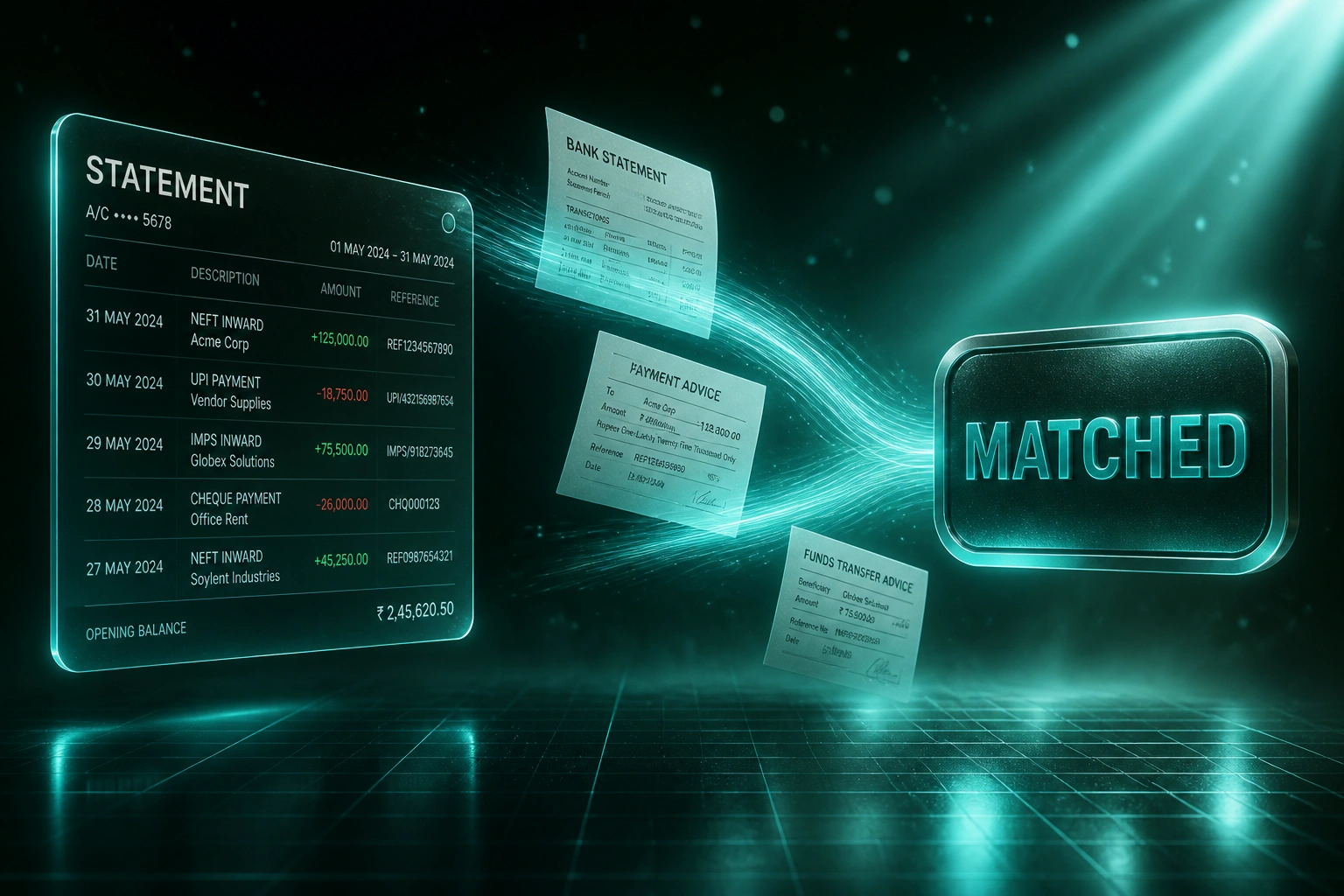
Import → auto-match → exception queue → cleared cash book. No human ticking every FNB or Nedbank line.
Statements Arrive
FNB, Standard Bank, Absa, or Nedbank CSV, OFX, or OFC exports land in your process
Import Repair
Layouts, dates, truncated references, and debit/credit signs are normalised
Auto-Match Lines
Amount, date window, and reference rules clear the majority against the cash book
Exceptions Only
Finance reviews uncleared, duplicate, and mismatch flags, then closes cash
Everything You Need for Reliable Bank Data Repair
Multi-Bank Statement Import Repair
We normalise FNB, Standard Bank, Absa, and Nedbank CSV, OFX, and OFC exports into one clean transaction stream, fixing layout quirks before matching begins.
Automated Line Matching
Statement lines match to your cash book and ledger by amount, date window, and reference. High auto-match rates leave only genuine exceptions for review.
Exception and Duplicate Flags
Uncleared items, duplicate imports, missing fees, and split payments surface in a queue instead of vanishing into a spreadsheet difference.
Accounting System Write-Back
Cleared matches and approved adjustments post into Xero, Sage, Pastel, or QuickBooks with an audit trail your controller can defend.
Reference and Narrative Normalisation
Truncated bank narratives and messy EFT references are cleaned so the same payment stops failing match rules every month.
Close-Ready Exception Packs
Finance reviews a short list of flagged lines, not every statement row, so month-end bank reconciliation stops owning the close calendar.
Banks and Ledgers We've Connected
From 14 Hours/Week to 2 Hours/Week
How a Gauteng wholesale group cut FNB and Absa statement matching from a full close bottleneck to an exception review.
The Manual Process
- Controller exported FNB and Absa CSVs, then matched lines in spreadsheets against Pastel
- 14 hours a week across four operating accounts during close week
- Duplicate import rows and uncleared EFTs regularly inflated the difference to chase
- True cash figure only landed mid-week after month-end
- Auditor evidence packs meant re-exporting the same statements under time pressure
The Automated Process
- Statement imports normalise automatically; ~95% of lines clear on first pass
- Finance reviews a short exception queue instead of every transaction
- Duplicate and uncleared flags surface the day the statement lands
- Cash book ties before management pack deadlines
- Match audit trail ready when auditors ask for bank evidence
Before vs After Statement Matching
How It Works
From first conversation to live statement matching in 2 to 4 weeks.
Show Us Your Banks
Which of FNB, Standard Bank, Absa, and Nedbank you use, how statements arrive today, and which accounting system holds the cash book.
Free Scoping Call
30-minute call to map statement formats, match rules, and the exception volume that currently burns close week.
Build, Match, Parallel Close
We repair imports, tune matching, and run parallel against your next month-end so auto-match rates are proven on live lines.
Go Live and Monitor
Manual ticking drops away. Exception alerts keep uncleared and duplicate lines visible before the following close.
Frequently Asked Questions
Which South African banks do you support for statement matching?
We routinely ingest FNB, Standard Bank, Absa, and Nedbank statement exports in CSV, OFX, OFC, and related business-banking layouts. If your bank can export a machine-readable statement, we can repair the import and match it to your records.
How is this different from ledger reconciliation or SARS filing work?
This page is about statement-to-ledger matching: taking each bank line and clearing it against your accounting records, with auto-match and exception flags. Broader GL versus sub-ledger repair and SARS filing automation are separate programmes.
Will automation disrupt our current month-end?
No. We run import repair and matching in parallel with your existing bank reconciliation, then switch once a close cycle proves the exception queue is trustworthy. Your team keeps the same accounting tools.
What happens to lines that do not auto-match?
They land in an exception queue with a reason code: uncleared, duplicate, amount mismatch, missing fee, split payment, or weak reference. Controllers review only those lines instead of re-ticking the full statement.
How long does SA bank statement reconciliation automation take to set up?
A focused FNB-to-Nedbank statement matching build for a mid-market close typically takes 2 to 4 weeks from scoping to a validated parallel month-end. Multi-entity or heavily customised Pastel environments usually take 4 to 6 weeks.
How much does bank statement matching automation cost?
Focused statement import repair and matching programmes typically start around R35,000. Multi-bank, multi-entity builds with custom exception rules usually land between R45,000 and R90,000. Most clients recover that inside 2 to 3 months against the 8 to 15 hours currently spent per account each month.
Stop Ticking Every Bank Statement Line by Hand
If your team is still matching FNB, Standard Bank, Absa, and Nedbank lines in spreadsheets, you are spending money on a month-end problem that automation already solves for SA finance teams.
Tell us which banks you use, how statements arrive today, and which accounting system holds the cash book. We will show you exactly how auto-match and exception flags would work for your close.