Handle Debit Order Disputes Under South African Banking Rules
A member or subscriber disputes a debit order weeks after collection. The bank reverses it inside the SA dispute window. Your team either writes the money off quietly or hammers collections, and you lose the relationship either way.
We build the dispute desk that matches mandate proof to CRM-aware responses so you protect revenue without burning goodwill.
Sound Familiar?
These are the exact issues subscription, membership, and utilities ops leads face when debit order reversals arrive without a process:
- A debit order reversal hits your Netcash or bank statement weeks after collection, and nobody owns the follow-up
- Finance treats every debit order dispute like a bad debt instead of checking mandate proof and the 60-day SA banking window
- Collections send blunt recovery messages that turn a cash-flow hiccup into a cancelled membership
- Authenticated DebiCheck collections and non-authenticated EFT mandates are handled the same way, so you lose the protection DebiCheck already bought you
- CRM still shows the member as Paid while the ledger has already reversed the amount, so ops and finance argue from different truths
From 13 April 2026 the industry dispute window is 60 calendar days with automated reversal inside that period, replacing the old 40-day auto / longer manual split. Without intake, mandate proof, and CRM status, you bleed cash for two months and still damage the relationship when you finally chase.
What Debit Order Dispute Handling Actually Does
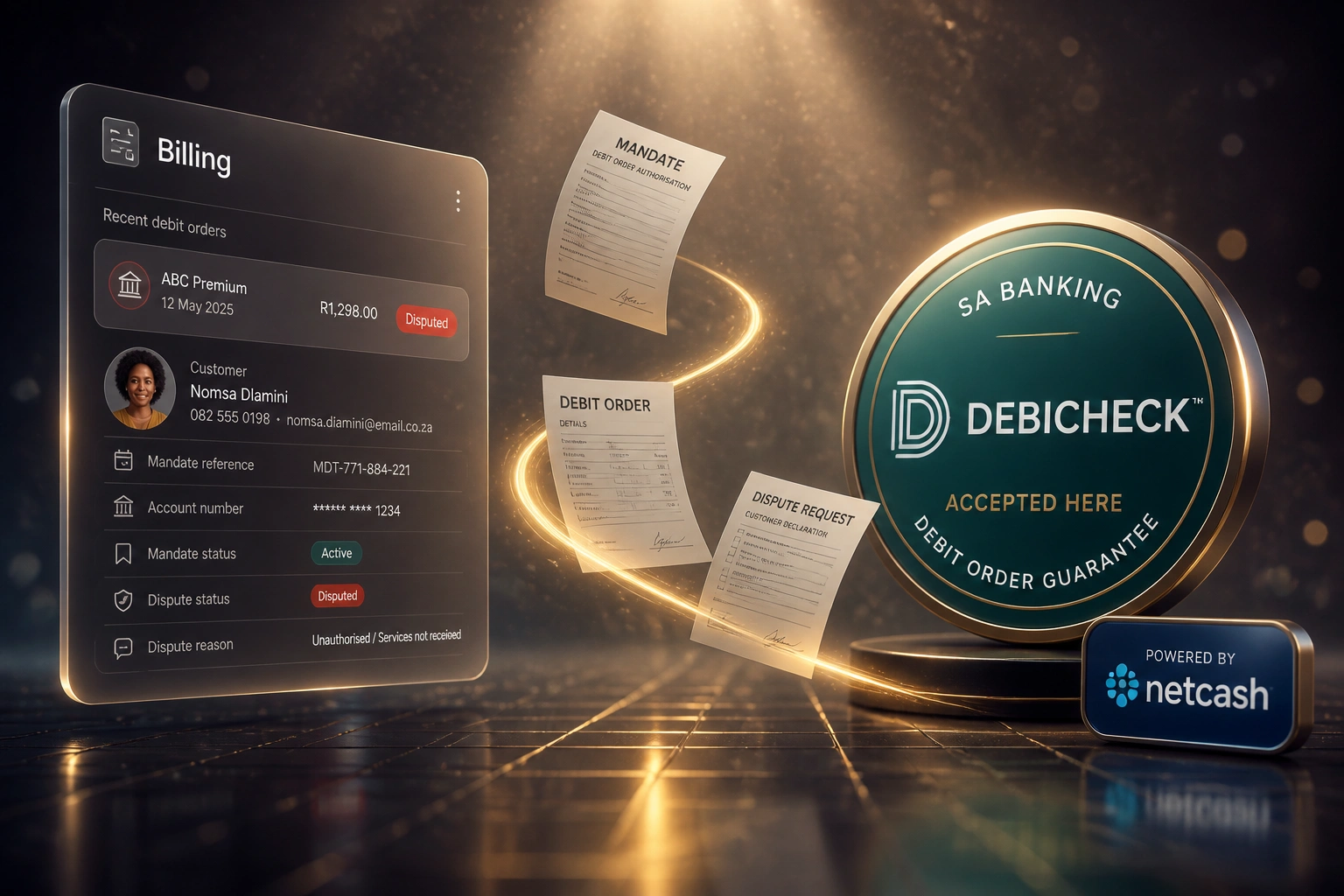
Reversal lands → mandate proof checked → CRM ticket opened → relationship-aware response. No silent write-offs.
Dispute Arrives
Netcash, PayFast, Peach, or bank return flags a debit order reversal with a reason code
Mandate Proof Pulled
DebiCheck auth, Registered Mandate, or paper mandate attached to the CRM dispute ticket
Path Chosen
Soft re-engage, re-mandate, payment plan, or credit, based on instrument type and window
Status Synced
CRM, billing, and ledger all show the same dispute outcome before the next collection run
Everything You Need for SA Debit Order Reversal Handling
Dispute Intake from Bank & Collector
When Netcash, PayFast, Peach, or your bank returns a disputed debit order, a CRM ticket opens with amount, action date, reason code, and mandate reference attached.
Mandate Proof Lookup
The workflow pulls the stored DebiCheck authentication, Registered Mandate, or paper mandate so your team can see within minutes whether the collection was authorised under SA banking rules.
Segmented Response Paths
Valid DebiCheck collections take a soft re-engagement path. Unauthenticated EFT disputes that fall inside the window take a recovery or re-mandate path. True errors get a credit and apology.
CRM Status Sync
Billing, membership, and collections all see Disputed, Investigating, Re-mandated, Recovered, or Written Off without chasing each other on WhatsApp.
Dispute Ratio Monitoring
Track dispute volume against the PASA 0.5% dispute-ratio threshold so you catch spikes before your sponsoring bank puts the abbreviated short name under review.
Relationship-First Playbooks
Scripts and SLA clocks favour retention: acknowledge fast, offer a re-auth or payment plan, and only escalate after mandate proof and customer contact have failed.
Platforms We've Wired into Dispute Desks
From R184K Written Off to R41K a Quarter
How a Cape Town multi-site membership group stopped bleeding on disputed debit orders and kept most members after the reversal.
The Silent Write-Off Process
- Ops discovered reversals days later on the Netcash unpaid and dispute report
- No mandate lookup: every dispute treated as lost cash
- Collections sent the same overdue script used for true non-payers
- CRM still showed Paid while the ledger had already reversed the fee
- Dispute ratio drifted toward the PASA 0.5% threshold with no early warning
The CRM Dispute Desk
- Every Netcash dispute opens a HubSpot ticket with mandate reference attached
- DebiCheck vs EFT paths split within the hour of the return
- Members get a soft re-auth or payment-plan offer before hard collections
- Billing and finance see the same Disputed / Recovered / Written Off status
- Dispute ratio dashboard alerts before the abbreviated short name is at risk
Before vs After SA Debit Order Dispute Handling
How It Works
From first conversation to a live dispute desk in 2–4 weeks.
Map Your Dispute Today
Where reversals land (Netcash reports, bank statements, email), who owns them, and how mandate proof is found today.
Free Scoping Call
30-minute call to design intake rules, DebiCheck vs EFT paths, CRM fields, and the 60-day response SLA.
Build & Test
We wire collector webhooks and reports into CRM tickets, test with real dispute reason codes, and run parallel for a collection cycle.
Go Live & Tune
Switch dispute handling to the structured desk. We watch dispute ratios, recovery rates, and retention in the first month.
Frequently Asked Questions
What is the current South African debit order dispute window?
From 13 April 2026, PASA, SARB, and FSCA rules give consumers 60 calendar days to dispute a debit order across EFT, Registered Mandates, and DebiCheck instruments. Disputes lodged inside that window are generally reversed automatically. After 60 days, banks stop processing disputes and the customer must contact you directly. Valid, correctly authorised DebiCheck collections remain far better protected than standard EFT debit orders.
How is this different from DebiCheck mandate setup or Netcash onboarding?
Mandate setup gets collections running. This page is about what happens after a successful debit is reversed. We build the dispute desk: intake from the collector or bank, mandate proof lookup, CRM-aware response paths, and recovery or retention playbooks that protect both cash and the customer relationship.
Will authenticated DebiCheck collections still reverse?
Valid DebiCheck mandates that meet the authorised-mandate criteria remain non-disputable for amount and date under the updated industry rules. Collections that breach mandate parameters, or non-authenticated EFT and Registered Mandate collections, still reverse inside the 60-day window. The workflow treats those instrument types differently so your team does not waste time arguing cases that cannot be defended.
Which payment platforms and CRMs can feed the dispute desk?
We have built dispute intake around Netcash, PayFast, Peach Payments, Stitch, and bank return files, with tickets and status sync into HubSpot, Pipedrive, Salesforce, Zoho CRM, and custom membership systems, plus ledger updates in Xero or Sage. If your collector exposes unpaid or dispute reason codes and your CRM can open tickets, we can connect them.
How long does a debit order dispute workflow take to set up?
A standard intake-to-resolution flow with collector feeds, mandate lookup, CRM tickets, and segmented response paths typically takes 2 to 4 weeks from scoping to go-live. Multi-brand membership groups, dual Netcash and DebiCheck stacks, or custom retention scripts take closer to 4 to 6 weeks.
How much does SA debit order dispute handling automation cost?
Structured dispute desks that open CRM tickets, attach mandate proof, segment DebiCheck vs EFT responses, and sync status typically range from R28,000 to R65,000. Membership, utilities, and subscription businesses processing more than about 30 disputes a month usually recover the build cost within one to two quarters through lower write-offs and fewer cancelled accounts.
Turn Debit Order Disputes into a Managed Desk
If SA banking rules keep reversing debit orders into your ledger while CRM still says Paid, you are paying for a problem that already has a structured answer.
Tell us which collector you use (Netcash, PayFast, Peach, Stitch), how DebiCheck and EFT mandates are stored, and what happens today when a dispute lands. We will show you exactly how a CRM dispute desk would work for your membership or subscription stack.