School Transport Management and Tracking: Safe Routes for Learners
When a driver is late, your morning becomes WhatsApp chaos, parent panic, and a principal who cannot see which GPS school bus is actually moving. Without bus route management, live tracking, and driver compliance logs, learner transport safety stays a hope rather than a system.
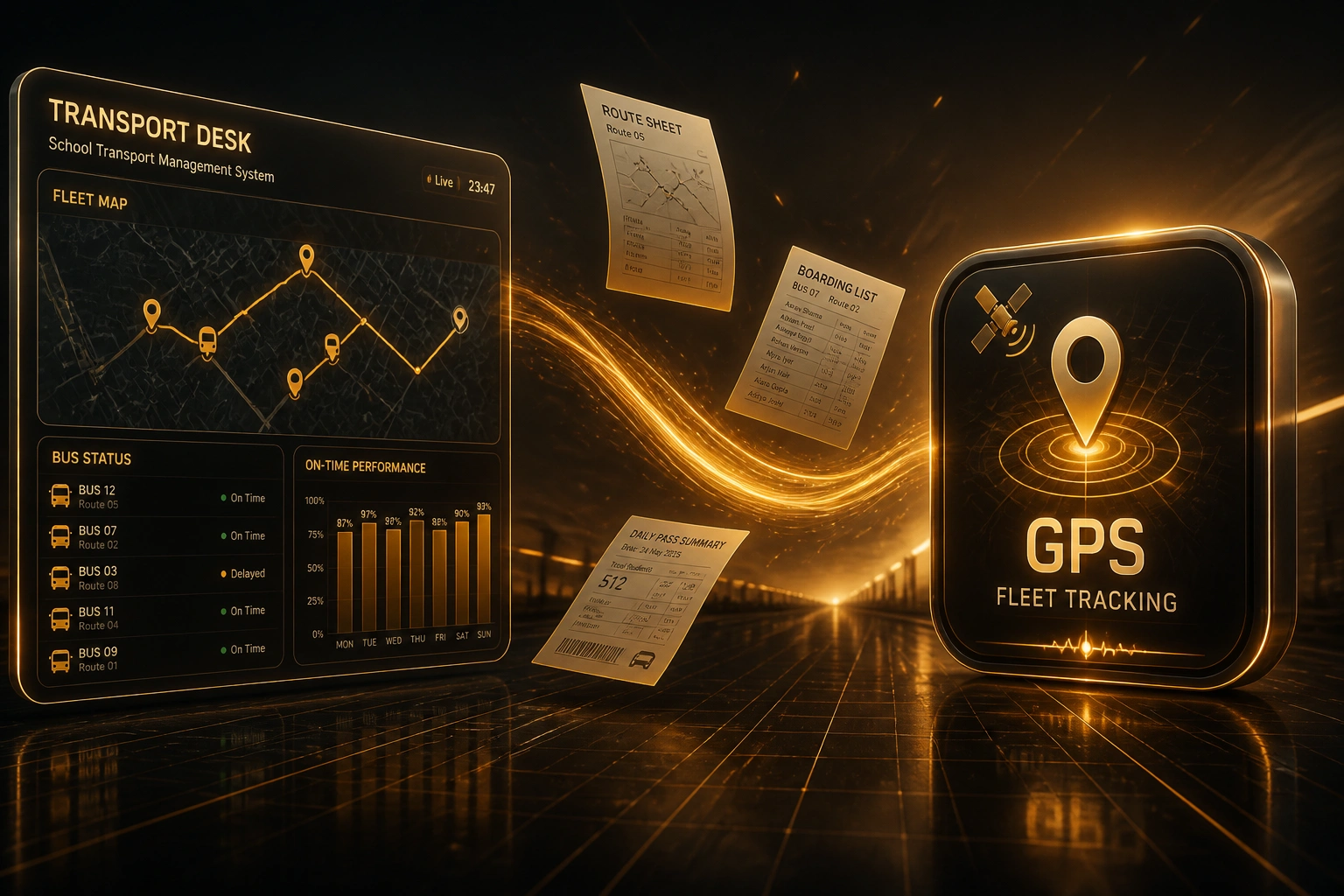
We build the Transport Desk that tracks the fleet, notifies parents, and proves compliance.
Sound Familiar?
These are the exact issues principals and ops managers bring us before a Transport Desk goes live:
- A late bus turns into a WhatsApp storm before anyone knows which route is stuck or which driver is offline
- Principals and ops managers rebuild morning status from phone calls instead of a live fleet view
- Driver PrDP, licence, and roadworthy renewals live in email folders until an inspector or insurer asks
- Routes grow by habit, not data, so fuel, overtime, and late arrivals compound every term
- SGB packs cannot show boarding times, GPS trails, or who was notified when an incident is questioned
Provincial pressure is rising. WCED's 2025 learner transport SOPs require GPS coordinates for every pick-up point and ready access to driver PrDPs and roadworthy certificates. POPIA treats learner geolocation as personal information. Paper folders and group chats will not survive the next inspection or incident review.
What School Transport Tracking Actually Does
Bus moves → desk updates → parents notified → compliance logged. No human copying status between chats.
GPS Event Fires
Vehicle location, stop arrival, or boarding check-in hits the Transport Desk in near real time
Ops Desk Updates
Route status, ETA, and exceptions appear for school-owned and contracted buses on one map
Parents Get Status
Delay, approaching, boarded, or arrived alerts push to d6, WhatsApp, Karri, or SMS
Compliance Logged
Driver documents, boarding times, and notification proof sit ready for SGB and insurers
Everything You Need for Learner Transport Safety
Live GPS Fleet Desk
Every school bus, contracted operator, or school-owned vehicle appears on one ops map with ETA, speed exceptions, and stop progress so reception stops guessing.
Route Optimisation
Pick-up sequences, load counts, and dwell times feed route planning so you cut redundant kilometres and protect on-time arrival without adding another WhatsApp group.
Parent Status Updates
Delay, approaching-stop, boarded, and arrived events push to d6, WhatsApp Business, Karri, or SMS. Parents get the signal before they ring the office.
Driver Compliance Monitoring
PrDP, licence class, roadworthy certificates, and operator documents get expiry alerts. Spot-check packs for the principal or district are one export, not a weekend scramble.
Multi-Operator Coordination
School-owned fleets and contracted operators share one Transport Desk. Route ownership, vehicle swaps, and exception ownership stay clear when three companies run your mornings.
Duty-of-Care Audit Trail
Boarding events, GPS breadcrumbs, and parent notifications are timestamped for SGB, insurers, and provincial monitors. When something goes wrong, you have a record, not reconstructed chats.
Systems We've Connected for School Transport
From 10 Hours/Week to 2.5 Hours/Week
How a Pretoria independent school with nine contracted buses cut morning status chaos and recovered a full term of admin time.
The Manual Process
- Reception fielded 40-plus "where's the bus?" calls before first period
- Ops rebuilt status from three operator WhatsApp groups and driver phone notes
- PrDP and roadworthy renewals surfaced only when a parent or insurer asked
- Late routes were discovered when learners arrived, not when GPS stalled
- SGB incident packs meant reconstructing chats after the fact
The Managed Process
- Transport Desk shows all nine buses live, school-owned or contracted
- Parents get delay and arrival updates on d6 and WhatsApp before they ring
- Driver document expiry alerts fire 30 days before inspection risk
- Route reviews cut one redundant loop and shortened two chronic late runs
- Boarding and GPS logs export for SGB and insurance questions in minutes
Before vs After Bus Route Management
How It Works
From first conversation to a live Transport Desk in 3–6 weeks.
Tell Us Your Setup
How many buses and operators, which GPS hardware you already own, and which parent channels parents actually open.
Free Scoping Call
30-minute call with your principal, SGB chair, or ops manager to map morning chaos, compliance gaps, and route pain.
Build & Test
We wire the Transport Desk, compliance alerts, and parent feeds, then run parallel for a week so staff can compare live data with the old WhatsApp habit.
Go Live & Monitor
Switch off the scramble. Monitoring catches silent GPS gaps, expired documents, and failed parent sends before families notice.
Frequently Asked Questions
How is this different from a parent bus-tracking app alone?
Parent alerts are one output. This is the management system schools run: live GPS across school-owned and contracted fleets, route optimisation, driver compliance logs, and an ops desk your principal can trust. Parent channels such as d6, WhatsApp, or Karri are optional feeds from that desk, not the product itself.
We use several contracted operators. Will this still work?
Yes. Multi-operator setups are the norm in South African independent and public schools. Each vehicle and driver lands on one Transport Desk with clear route ownership, so your office sees the whole morning regardless of which company owns the bus.
Does this help with provincial learner transport compliance?
Western Cape LTS procedures already expect GPS coordinates for pick-up points and require schools to hold driver licences, PrDPs, and roadworthy certificates ready for inspection. The National Learner Transport Policy puts safety monitoring and enforcement on provinces and operators. A live desk with document expiry alerts and exportable logs makes those checks routine instead of reactive.
Is learner location data POPIA-safe?
Geolocation is personal information under POPIA, and children's data needs tighter safeguards. Parents only see their own learner's route events, staff access is role-based, we sync only the fields needed for routing and alerts, and retention rules are agreed with the school before go-live.
How does this reduce SGB and insurance exposure?
When a late bus or incident is challenged, you need boarding times, GPS trails, and proof of parent notification, not a reconstructed WhatsApp thread. Timestamped logs support duty-of-care questions from parents, the SGB, and insurers, and they shorten the scramble after an event.
How much does a school transport management system cost?
A focused GPS-to-ops desk with parent status feeds starts from around R25,000. Full setups with multi-operator dashboards, route optimisation, driver compliance monitoring, and MIS sync typically range from R40,000 to R85,000. Schools recovering even a few morning admin hours each week usually reach payback inside one term.
Stop Running Learner Transport on WhatsApp
If your principal still learns about late buses from angry parents, you are spending staff hours and risk on a problem a Transport Desk already solves.
Tell us how many buses and operators you run, which GPS kit you already have, and which parent channels families use. We will show you exactly how school transport management and tracking would work for your campus.