Shipping Carrier Integration: Automate Labels and Tracking
Your packing bench still books shipments in carrier portals, then pastes tracking numbers into the storefront. That lag drives WISMO tickets, delayed notifications, and chargebacks your ops team cannot afford.
We build the shipping automation that prints labels, shops rates, and writes tracking back automatically.
Sound Familiar?
These are the exact issues our clients faced before shipping automation:
- Ops still logs into DHL, FedEx, or UPS portals to book each shipment by hand
- Tracking numbers get pasted into Shopify or WooCommerce hours after the parcel leaves
- Customers open WISMO tickets because the storefront still says "unfulfilled"
- Nobody rate-shops across carriers, so you overpay on ground and air labels
- Peak-season portal logins and UI changes slow the packing bench to a crawl
FedEx retired its legacy SOAP Web Services on 1 June 2026, after USPS retired Web Tools on 25 January 2026. Carrier portals keep changing, peak season multiplies volume, and teams still stuck in browser tabs fall further behind on rate shopping and tracking write-back.
What Shipping Automation Actually Does
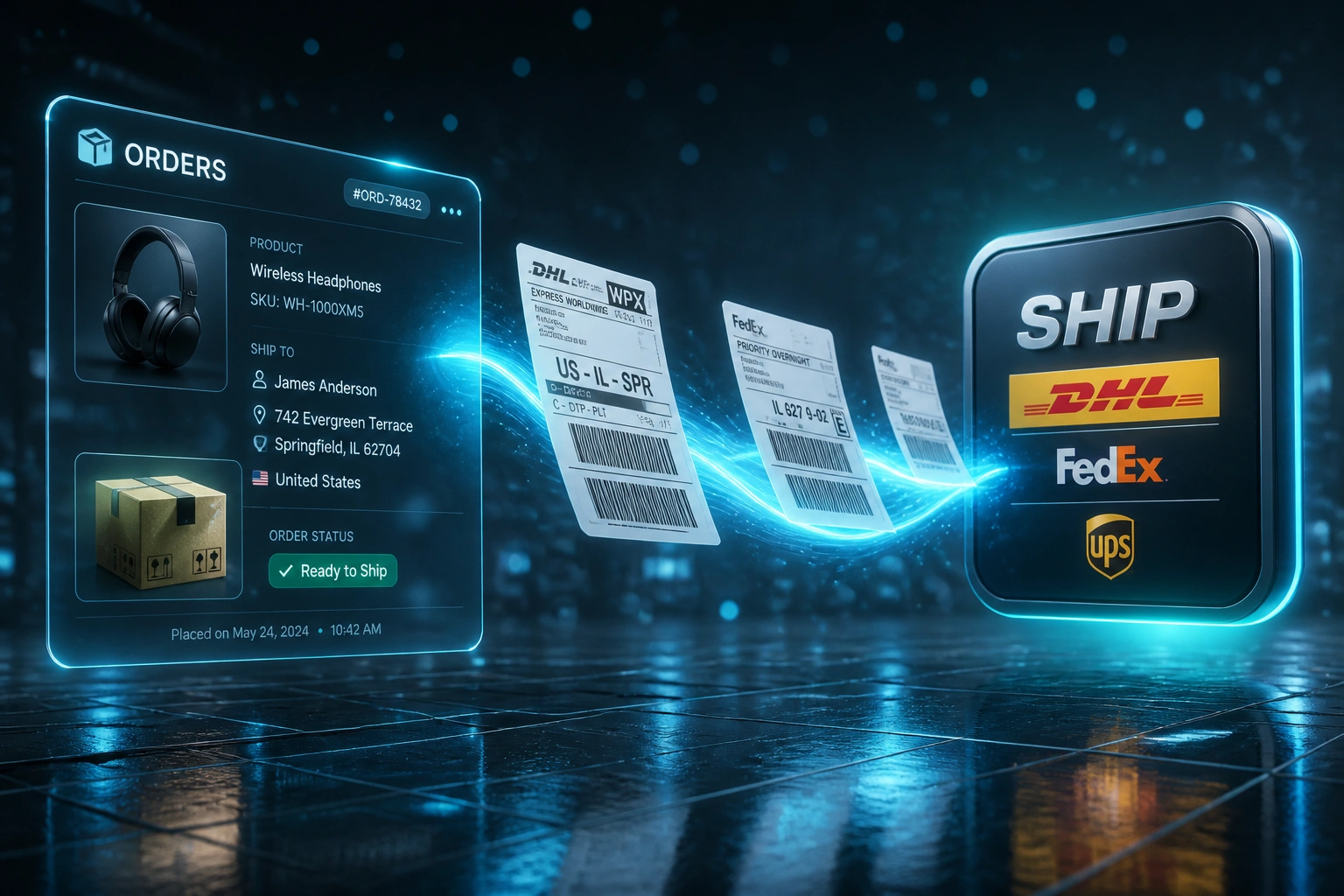
Order ready → label printed → tracking synced → customer notified. No portal copy-paste.
Order Ready to Ship
Packed order hits Ready to Ship in Shopify, WooCommerce, or your WMS
Rate Shop & Print Label
Carrier API compares services, picks the rule match, and returns a label
Tracking Writes Back
Tracking number and carrier sync into the storefront or ERP in seconds
Customer Notified
Shipped and delivery updates go out automatically, cutting WISMO tickets
Everything You Need for Reliable Carrier API Shipping
Automated Label Generation
Order hits Ready to Ship → carrier API returns a printable label with the correct service, weight, and destination. No portal login.
Multi-Carrier Rate Shopping
Compare DHL, FedEx, UPS, and aggregator rates in one call. Rules pick cheapest, fastest, or best value before the label prints.
Tracking Write-Back
Tracking number and carrier status sync back to Shopify, WooCommerce, or your ERP the moment the label is purchased.
Proactive Shipment Notifications
Customers get shipped, in-transit, and delivered updates automatically. Support stops answering "where is my order?" all day.
Storefront & ERP Mapping
Package dimensions, service levels, and warehouse origins map to your real SKUs and fulfilment locations, not a generic template.
Exception & Error Handling
Address failures, rate timeouts, and voided labels retry with alerts. Your team only steps in when a human decision is needed.
Platforms We've Connected for Shipping Automation
From 7 Hours/Day to Under 45 Minutes
How a mid-size ecommerce brand stopped pasting tracking numbers and cut WISMO tickets by 60%.
The Manual Process
- Ops booked each shipment in DHL or FedEx portals, then copied tracking into Shopify
- About 4 minutes per order across ~110 daily shipments
- Tracking emails often went out hours after the courier collected
- WISMO made up nearly half of support tickets in peak weeks
- No rate shopping: default carrier every time, even when cheaper options existed
The Automated Process
- Ready to Ship triggers multi-carrier rate shop and label print
- Tracking writes back to Shopify within seconds of label purchase
- Customers get shipped and delivery notifications without a support hop
- WISMO volume dropped by roughly 60% within the first quarter
- Rate rules pick cheapest qualifying service, with one-click override when needed
Before vs After Shipping Carrier Integration
How It Works
From first conversation to live shipping automation in 2–4 weeks.
Tell Us Your Setup
Which storefront, which carriers, how labels get printed today, and where tracking falls behind.
Free Scoping Call
30-minute call to map order → label → tracking write-back, pick rate rules, and size the build.
Build & Test
We wire carrier APIs and storefront sync, test with live orders, and run parallel against your current process.
Go Live & Monitor
Switch off portal copy-paste. Monitoring catches failed labels and missed tracking updates before customers do.
Frequently Asked Questions
How long does shipping carrier integration take to set up?
A standard Shopify or WooCommerce to multi-carrier label and tracking sync takes 2–4 weeks from scoping to go-live. Single-carrier label automation can be live within a week. Complex ERP-backed fulfilment with custom rate rules takes closer to 4–6 weeks.
Which carriers and platforms can you connect?
We've built shipping automation around DHL, FedEx, UPS, and multi-carrier layers like ShipStation and EasyPost, writing tracking back into Shopify, WooCommerce, and custom ERP or WMS stacks. South African local courier work (The Courier Guy, Aramex ZA, Dawn Wing) is covered on a separate integration page.
Will this disrupt our packing bench?
No. Packers keep scanning and printing. The change is that labels generate from the order record and tracking writes back without anyone opening a carrier portal. We run parallel testing before you switch off the manual path.
What happens when a label fails or an address is invalid?
Failed bookings retry automatically. Address and rate errors surface in an exception queue with the order context your ops lead needs. Valid labels still ship; only the problem rows wait for a human.
Can we still pick a specific carrier when we need to?
Yes. Rate shopping applies your default rules (cheapest, fastest, or best value), and ops can override a service for any order before the label prints. Preferred-carrier rules also honour negotiated account rates.
How much does shipping carrier integration cost?
Simple one-way label and tracking syncs start from around R15,000. Multi-carrier rate shopping with storefront write-back and notification triggers typically ranges from R25,000 to R60,000. Teams shipping 50+ orders a day usually see ROI within 2–3 months against WISMO labour and portal admin time.
Stop Pasting Tracking Numbers by Hand
If your ops team is still booking labels in carrier portals and copying tracking into the store, you are funding WISMO tickets and delayed notifications that shipping automation already solves.
Tell us which storefront and carriers you use, how many orders you ship a day, and where tracking falls behind. We will show you exactly how automated labels, rate shopping, and tracking write-back would work for your business. Need South African local couriers instead? That work lives on our courier integration page.