Skills Development and Competency Tracking: Map Employee Growth
Without a live competency map, training spend is spray-and-pray, promotions are guesswork, and your SDF assembles SETA and BBBEE skills evidence in a panic each April. Boards and clients still ask whether the workforce can deliver.
We wire competency frameworks to your LMS and HR platform so skills gaps become targeted courses and measurable growth.
Sound Familiar?
These are the exact issues L&D heads, SDFs, and CHROs bring us before competency tracking is live:
- Competency matrices live in Excel and are out of date the week after the annual review
- Training catalogues are spray-and-pray: spend goes up, skills gap analysis stays guesswork
- LMS completions never update role proficiency, so development plans ignore what people already finished
- Promotions and succession readiness rely on manager opinion instead of a live skills inventory
- SETA WSP and BBBEE skills evidence is assembled in a panic each April from OFO codes, HR exports, and certificate folders
The 30 April WSP deadline does not move. Mandatory grant recovery (20% of your Skills Development Levy) and discretionary SETA funding depend on credible skills mapping. If your competency data is still in spreadsheets, skills levy recovery and BBBEE Skills Development evidence become an annual fire drill.
What Competency Tracking Actually Does
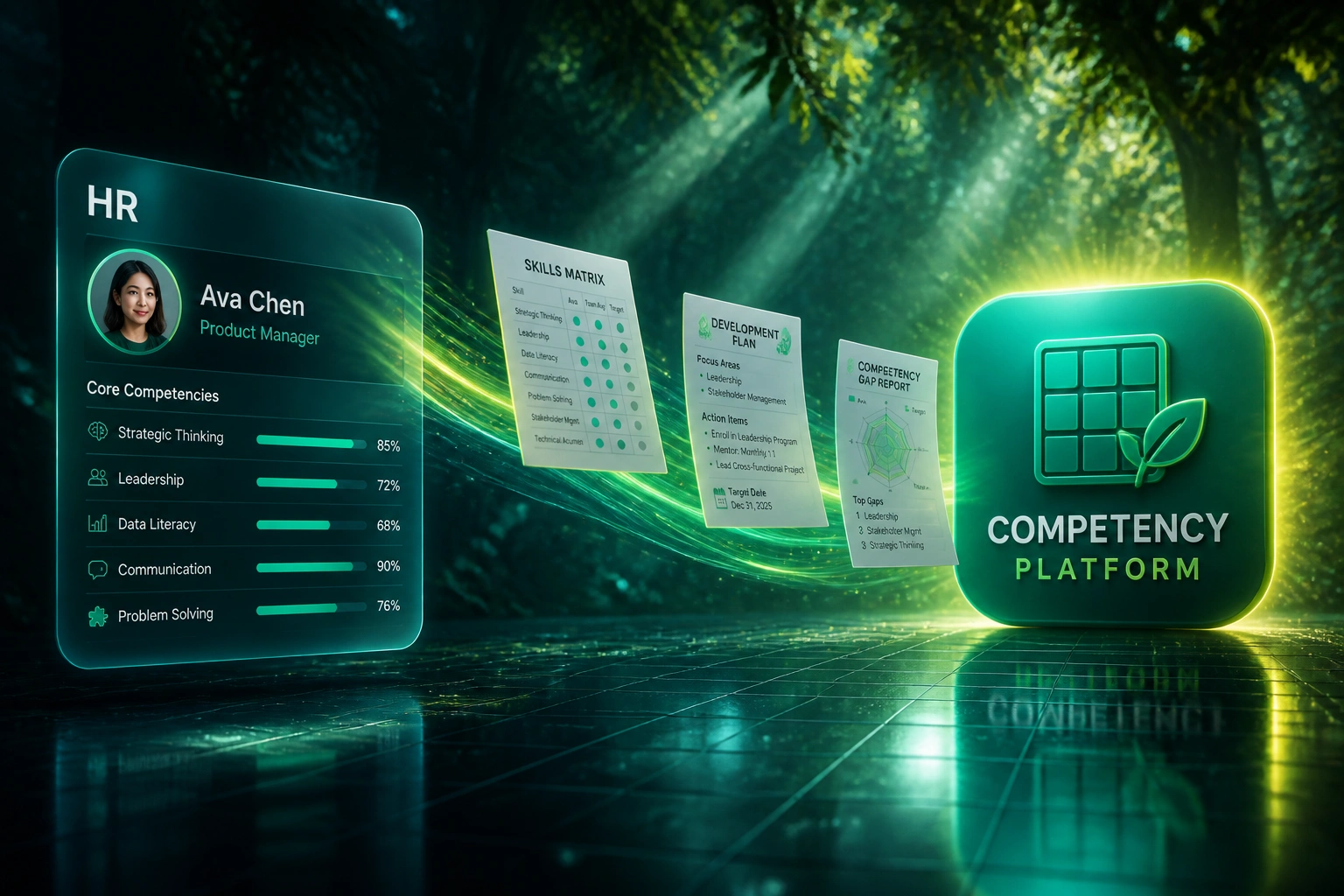
Role model → skills inventory → gap analysis → targeted learning. LMS evidence closes the loop in HR.
Define Role Competencies
Each role maps to required skills, proficiency levels, and OFO codes in your HR platform
Score the Skills Inventory
Assessments and manager ratings sit against the model so gaps are visible by person and team
Push Targeted Learning
Gaps trigger development plans and LMS recommendations instead of a generic course catalogue
Write Evidence Back
Completions and certificates update proficiency so succession readiness and WSP data stay current
Everything You Need for Skills Gap Analysis That Sticks
Role Competency Models
Map each role to required competencies, proficiency levels, and OFO occupations so HR holds a living skills framework, not a static job description.
Skills Inventory Sync
Employee profiles in your HR platform stay aligned with assessed and evidenced skills. Update proficiency in one place, see it everywhere L&D and people managers look.
Gap Analysis to Learning Plans
Documented gaps generate targeted development plans and LMS course recommendations. Completions flow back to close the gap on the competency record.
LMS Evidence Write-Back
Course completions, assessments, and certificates from Moodle, Cornerstone, Degreed, or your LMS update competency status automatically. No re-keying into HR.
WSP and OFO Readiness
Headcount, OFO codes, planned interventions, and ATR actuals pull from HR and LMS so your SDF stops rebuilding the Workplace Skills Plan from scratch every March.
Succession and Mobility Views
Boards and clients ask who is ready. A live competency map shows bench strength by role, critical skill, and equity cohort without another spreadsheet project.
Platforms We've Connected for Competency Tracking
From Three-Week WSP Scramble to Five Days
How a 220-person industrial services firm replaced spreadsheet competency matrices with a live skills map wired to Moodle and Sage People.
The Manual Process
- SDF rebuilt OFO mappings and planned interventions from HR exports every March
- Competency matrix in Excel, refreshed once a year after performance reviews
- LMS completions never updated proficiency, so development plans ignored finished courses
- Training catalogue bought in bulk with weak link to documented skills gaps
- Succession conversations started with "who do we think is ready?" instead of evidence
The Connected Process
- Role competency models and OFO codes live in Sage People
- Moodle completions write proficiency evidence back to the skills inventory
- Gap analysis opens targeted development plans and course recommendations
- WSP draft pulls headcount, interventions, and ATR actuals from systems already in use
- CHRO can show bench strength by critical skill without another spreadsheet project
Before vs After Competency Tracking
How It Works
From first conversation to live competency tracking in 3-6 weeks.
Tell Us Your Setup
Which HR platform, which LMS, how your competency framework and WSP process work today.
Free Scoping Call
30-minute call to map role models, gap rules, learning recommendations, and SETA reporting needs.
Build & Test
We wire skills inventories, LMS write-back, and development-plan triggers, then validate against real employee records.
Go Live & Monitor
Switch off the annual spreadsheet rebuild. Monitoring keeps gap alerts and sync failures visible to L&D.
Frequently Asked Questions
How is competency tracking different from LMS-HR training sync?
Training sync moves assignments and completions between your LMS and HR. Competency tracking goes further: it maintains role competency models, a live skills inventory, gap analysis, and development plans that pull evidence from LMS completions and push targeted learning recommendations back. Completions become proficiency updates, not just attendance ticks.
Which HR and LMS platforms can you connect?
We have built competency and skills flows around SAP SuccessFactors, Workday, BambooHR, Sage People, Moodle, Cornerstone, Degreed, and custom HRIS or LMS stacks. If both systems expose an API or secure file exchange, we can usually map roles, skills, and evidence between them.
Will this replace our SETA WSP submission process?
No. Your SDF still submits to the SETA. What changes is the scramble beforehand. OFO-mapped headcount, planned interventions, and ATR actuals come from systems that already hold the truth, so the Workplace Skills Plan is assembled from live data instead of rebuilt from exports every April.
How do you handle OFO codes and role competency models?
During scoping we map your job architecture to OFO occupations and to the competencies each role needs. That mapping becomes the spine of the skills inventory. When roles change or SETA templates update, we adjust the model rather than starting from a blank spreadsheet.
Will managers and employees notice disruption?
They keep using the same HR and LMS tools. The integration sits behind the scenes: assessed skills, course evidence, and development plans stay consistent across systems. We run parallel testing so L&D signs off before any manual matrix is retired.
How much does a competency tracking integration cost?
Focused one-way skills write-back from LMS to HR starts from around R20,000. Full bidirectional competency tracking with role models, gap-driven learning plans, and WSP-ready extracts typically ranges from R35,000 to R75,000. Most mid-size employers recover that inside one WSP cycle against SDF time and wasted training spend.
Stop Guessing Where Skills Development Should Go
If your competency matrix is a spreadsheet and your WSP is still a March overtime project, you are funding a problem that integration already solves.
Tell us which HR platform and LMS you run, how your role competency models work today, and where skills gap analysis breaks down. We will show you how a live map would drive targeted development and SETA-ready evidence for your organisation.