Stock Availability Monitoring and Scraping: See Sell-Outs Before Your Team Does
You still check competitor and supplier stock pages by hand. Rivals sell out and restock while your spreadsheet is half finished. That lag hides demand spikes, sourcing risk, and the hours when you could have captured the sale.
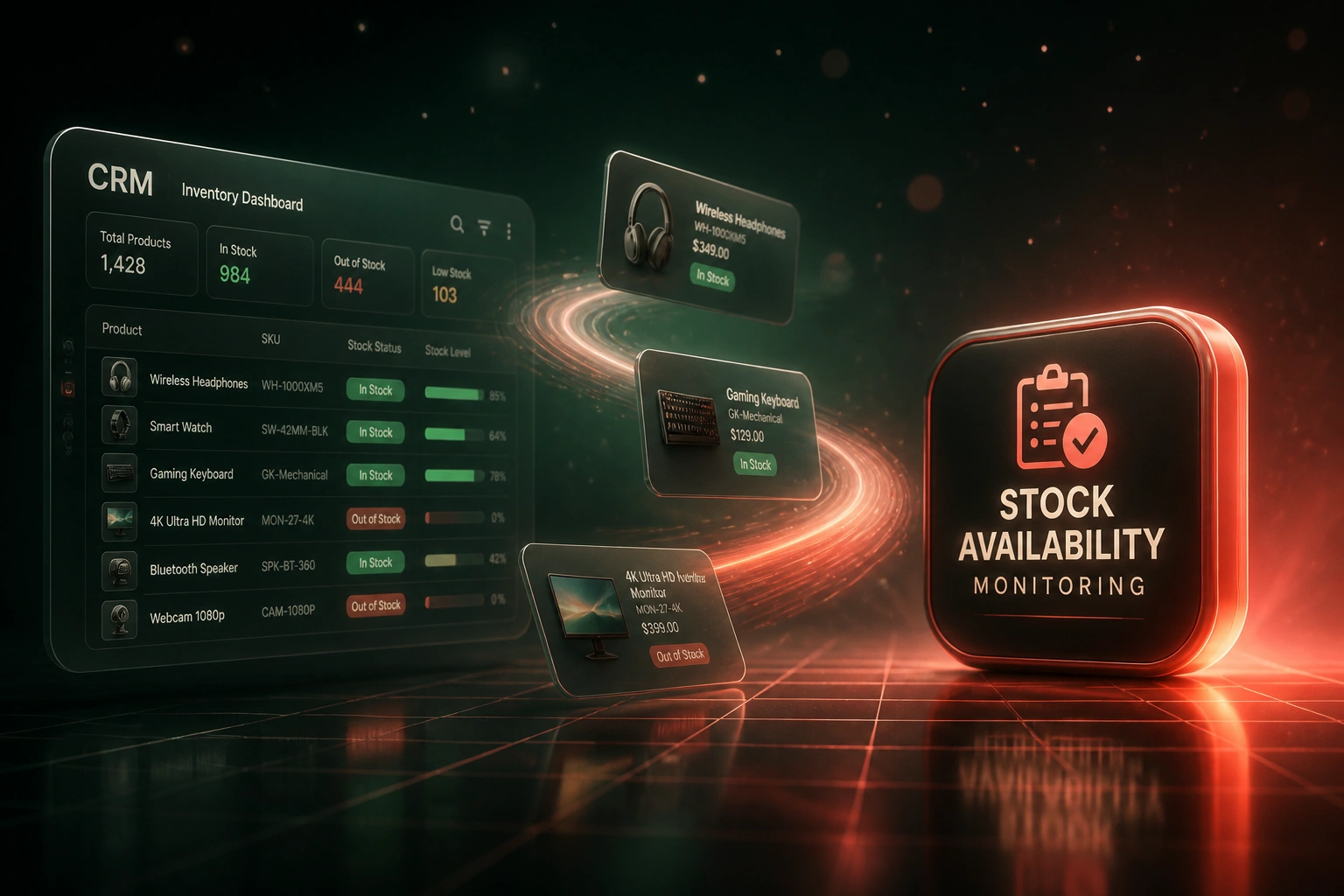
We build scheduled inventory scraping with in/out-of-stock alerts so product availability tracking reaches CRM or inventory tools in time to act.
Sound Familiar?
These are the exact issues ecommerce and procurement leads faced before stock monitoring:
- Your ecommerce or procurement lead still opens competitor and supplier product pages tab by tab to see who is in stock
- By the time the spreadsheet is updated, a rival has already sold out and restocked, and you missed the demand window
- Supplier stockouts hit your purchasing team as a surprise, not as an alert hours or days earlier
- Nobody owns a single availability sheet, so sales, buying, and ops argue from three different stock pictures
- Low-stock and out-of-stock signals are spotted by chance, not by scheduled product availability tracking
Empty shelves alone account for about R11.3 trillion in global retail losses (IHL empty-shelf component of inventory distortion, converted at ~R16.34/USD). Stockouts already cost roughly 4.1% of revenue for the average retailer. Waiting days to notice a competitor or supplier OOS is leaving that money on the table.
What Stock Availability Monitoring Actually Delivers
Pages scraped → status classified → alerts fired → team acts. No human refreshing competitor tabs.
Pages Scraped
Competitor and supplier product URLs checked on your schedule
Status Classified
In stock, out of stock, or low stock read from badges and buy buttons
Alerts Fired
Sell-out and restock events hit Slack, email, or your CRM feed
Team Acts
Boost ads, raise safety stock, or switch supplier before the gap closes
Everything You Need for Inventory Scraping and Alerts
Scheduled Stock Scraping
Automated inventory scraping of competitor and supplier product pages on a cadence you choose, from hourly for hot SKUs to daily for slower lines.
In / Out-of-Stock Detection
We watch availability badges, add-to-cart states, and low-stock chips so status flips are captured without monitoring the whole noisy page.
Restock and Sell-Out Alerts
Ping Slack, email, or WhatsApp the moment a tracked SKU goes OOS, returns to stock, or drops into a low-stock band you define.
Demand Pattern History
Keep a timeline of how often rivals sell out and how long they stay dark, so restock cadence becomes a planning signal, not a rumour.
Supplier Risk Watch
Monitor critical supplier catalogue pages so sourcing risk surfaces before your own warehouse feels the shortage.
Feeds Into Your Stack
Push structured stock status into Google Sheets, your CRM, inventory tools, or a BI dashboard so the team acts without living in browser tabs.
Sources and Destinations We Connect
From 8 Hours/Week to 1 Hour/Week
How a Johannesburg multi-channel ecommerce team stopped tab-checking stock and started capturing competitor sell-out windows within hours.
The Manual Process
- Marketplace manager opened rival Takealot and Shopify listings every morning
- Supplier catalogue checks happened twice a week, if someone remembered
- Spreadsheet was often a day stale by the time ops read it
- Competitor sell-outs were noticed after the advertising window had closed
- Procurement learned about supplier OOS when a PO failed, not when the page flipped
The Automated Process
- Scheduled scrapers watch priority competitor and supplier URLs
- In/out-of-stock and low-stock flips alert Slack within the scrape cycle
- Availability sheet and CRM feed stay current without copy-paste
- Marketing boosts "in stock" ads when a rival goes dark
- Buying team gets supplier OOS signals 1–2 days earlier on average
Before vs After Stock Monitoring
How It Works
From first conversation to live stock monitoring in 2–4 weeks.
Tell Us What You Watch
Which competitor and supplier URLs matter, how many SKUs, and whether you care most about sell-outs, restocks, or both.
Free Scoping Call
30-minute call to map scrape cadence, alert rules, and where availability feeds should land.
Build & Validate
We scrape a pilot set, confirm in/out-of-stock detection against live pages, then lock fields for your availability sheet.
Go Live & Monitor
Full SKU coverage with scheduled runs, failure alerts, and a review loop when a site layout changes.
Frequently Asked Questions
What is stock availability monitoring and scraping?
It is the automated collection of in-stock, out-of-stock, and low-stock signals from competitor or supplier product pages, delivered as alerts and structured feeds. Your team stops refreshing tabs and starts acting on supply and demand signals hours or days sooner.
How is this different from ecommerce price comparison scraping?
Price comparison tracks what rivals charge. Stock monitoring tracks whether they can fulfil at all. Sell-outs reveal demand spikes and sourcing risk; restocks reveal replenishment patterns. Many clients run both, but the decisions they drive (ads, buying, safety stock) are different.
How often do product stock statuses actually change?
Hot ecommerce SKUs can flip in and out of stock several times in a restock window, and one in three retail stock monitors on major platforms are set to check hourly or faster. Manual morning checks cannot keep up. We set scrape cadence to how contested your categories are.
Will this help with supplier stockouts as well as competitors?
Yes. Procurement teams use the same inventory scraping pattern on supplier catalogue pages to spot OOS and low-stock signals before a purchase order fails. Early warning reduces expedite freight and the B2B trust damage that follows repeated stockouts.
How long does stock availability monitoring take to set up?
A pilot on a focused SKU set is typically live within 1 to 2 weeks. Broader competitor and supplier coverage with alerts and sheet or CRM delivery usually takes 2 to 4 weeks from scoping to go-live.
How much does stock availability monitoring and scraping cost?
Focused one-way scrapes into a sheet start from around R15,000. Multi-source builds with restock alerts, history, and CRM or inventory feeds typically range from R25,000 to R60,000. Teams spending 8+ hours a week on manual checks often see payback within a few months.
Stop Guessing Who Is In Stock
If your team is still refreshing competitor and supplier pages by hand, you are spending money on a lag that automated stock monitoring already solves.
Tell us which listings matter, how often status flips, and where alerts should land. We will show you exactly how inventory scraping would work for your catalogue.