Takealot Marketplace Integration: Automate Stock, Prices, and Orders
Your team still logs into Takealot Seller Portal to update stock and prices by hand. Every delay risks oversells, Buy Box losses, and late dispatches that tank your Seller Performance metrics.
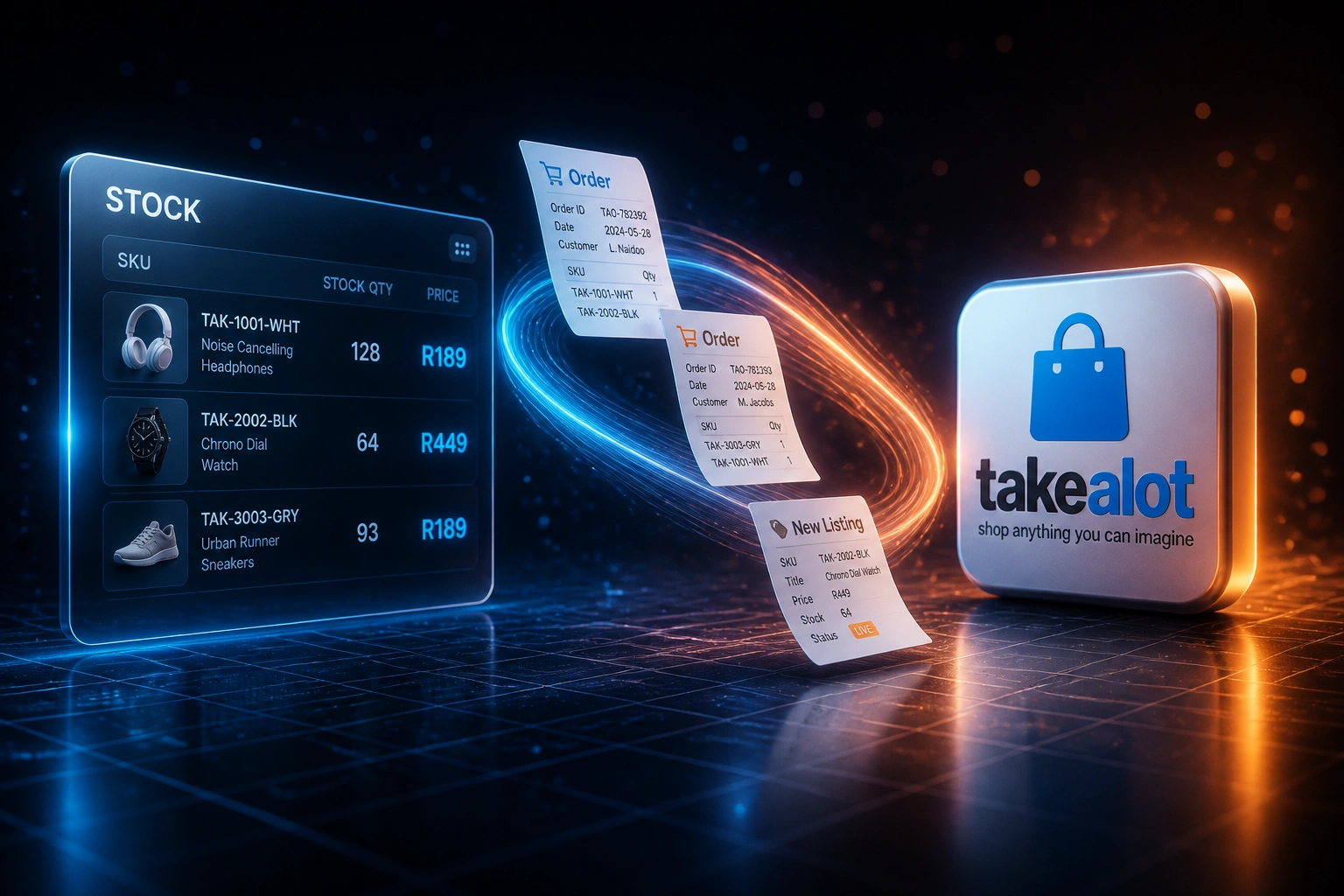
We build the Takealot API integration that keeps listings, stock, prices, and orders in sync with your system of record.
Sound Familiar?
These are the exact issues our Takealot sellers faced before integration:
- Stock and prices still get typed into Takealot Seller Portal by hand every morning
- A sale on Shopify or your own site leaves Takealot showing stock that is already gone
- Oversell cancellations hit your Seller Performance score and cost R57.50 each
- Lead-time orders miss the DC window, triggering penalties and Buy Box losses
- Your ops lead spends 10–20 hours a week babysitting listings instead of growing the brand
Takealot's lead-time SLAs are unforgiving: more than 2% late arrivals or 1% cancelled lead-time orders in a week can drop you down the suspension waterfall. Miss the window and your listings go Not Buyable for days while competitors take the Buy Box.
What Takealot Seller Automation Actually Does
Stock moves → Takealot updates → orders flow back. No human copying data between systems.
Stock or Price Changes
Your ERP, warehouse, or Shopify store updates quantity or selling price
Takealot Offer Updated
Seller API pushes stock, price, RRP, and lead-time fields to the matching offer
Order Lands in Your System
A Takealot sale imports with SKU, qty, and fulfilment details ready to pick
Channels Stay Aligned
Stock reserved across Takealot and your other channels so you never oversell
Everything You Need for Reliable Takealot API Sync
Live Stock Sync
When stock moves in your ERP, warehouse system, or Shopify store, Takealot lead-time stock updates automatically so you stop overselling.
Centralised Price Updates
Change a selling price or RRP once in your system of record. The Takealot API pushes it to every affected offer without SKU-by-SKU portal work.
Order Intake Automation
New Takealot sales land in your warehouse or ERP within minutes, with SKUs, quantities, and customer details ready for picking.
Lead-Time Guardrails
Lead-time days and stock buffers stay aligned with real availability, so late arrivals and cancellation thresholds stay inside Takealot SLAs.
Multi-Channel Inventory
Takealot, your website, and any other channels share one stock picture. A sale anywhere reserves stock everywhere else.
Exception Alerts Only
Failed syncs retry automatically. Your team only sees alerts when a listing needs a human decision, not a daily portal checklist.
Systems We've Connected to Takealot
From 14 Hours/Week to Under 2
How a Cape Town homeware brand stopped overselling on Takealot, protected its Seller Performance score, and recovered R140,000 in staff time in year one.
The Manual Process
- Ops lead updated ~400 SKUs in Seller Portal every morning from a spreadsheet
- Shopify sales left Takealot showing stock that was already gone
- 2–3 oversell cancellations a week at R57.50 each, plus performance score hits
- Lead-time accuracy sat around 88%, always close to the 2% late threshold
- Price changes for promotions took half a day of SKU-by-SKU portal work
The Automated Process
- Stock and price changes in Shopify push to Takealot offers within minutes
- Orders import straight into the warehouse queue for picking
- Zero oversell cancellations in the first three months after go-live
- Lead-time compliance climbed from 88% to 98%
- Ops reviews exceptions only; no daily portal stock ritual
Before vs After Takealot Integration
How It Works
From first conversation to live Takealot sync in 2–4 weeks.
Tell Us Your Setup
Which systems hold stock and prices today, how many SKUs you run on Takealot, and where the manual work hurts most.
Free Scoping Call
30-minute call to map Seller Portal workflows, lead-time rules, and the sync design that protects your performance score.
Build & Test
We connect the Takealot Seller API, test with your real offers, and run parallel updates until stock and prices match every time.
Go Live & Monitor
Switch off the morning portal ritual. Monitoring and alerts keep listings, orders, and lead times in sync.
Frequently Asked Questions
How long does a Takealot marketplace integration take to set up?
A standard stock, price, and order sync takes 2–4 weeks from scoping to go-live. Sellers with a clean SKU map and an existing API-ready ERP often go live in under two weeks. Multi-warehouse or multi-channel setups with custom lead-time rules take closer to 4–6 weeks.
Which systems can connect to Takealot Seller Portal?
We have connected Takealot to Shopify, WooCommerce, Odoo, Sage, Xero, Unleashed, Cin7, and custom ERPs. If your system of record has an API or a reliable export, we can keep Takealot offers in sync with it.
Will this disrupt our current Seller Portal workflows?
No. Your team keeps using Takealot for promotions, content, and exceptions. Automation handles the repetitive stock, price, and order work behind the scenes. We run parallel testing before you switch off manual updates.
How does integration protect our Seller Performance score?
Real-time stock sync cuts oversell cancellations that damage your score. Lead-time stock and days stay aligned with what you can actually ship, which helps you stay under Takealot's late-order and cancellation thresholds that trigger lead-time suspensions.
Do we still need someone watching the Seller Portal every day?
You will still review promotions, returns, and the occasional exception. Most clients drop daily stock and price chores from 10–20 hours a week to a short exception review. Order intake and listing updates run without someone logging in every morning.
How much does Takealot marketplace integration cost?
Simple one-way stock and price syncs start from around R15,000. Bidirectional setups with order intake, multi-channel reservation, and custom lead-time logic typically range from R25,000 to R60,000. Most sellers spending 10+ hours a week in Seller Portal see ROI within 2–3 months.
Stop Wasting Time in Takealot Seller Portal
If your team is still updating stock and prices by hand, you are paying for oversells, SLA risk, and hours that should be growing the brand.
Tell us which system holds your stock today, how many SKUs you run on Takealot, and where the friction sits. We will show you exactly how Takealot seller automation would work for your operation.