Task Management System for Teams: Shared Visibility Into Who Owns What
Sticky notes and mental to-do lists do not scale. When work lives in WhatsApp, email, and people's heads, nothing is truly owned, deadlines slip silently, and managers spend the day chasing status.
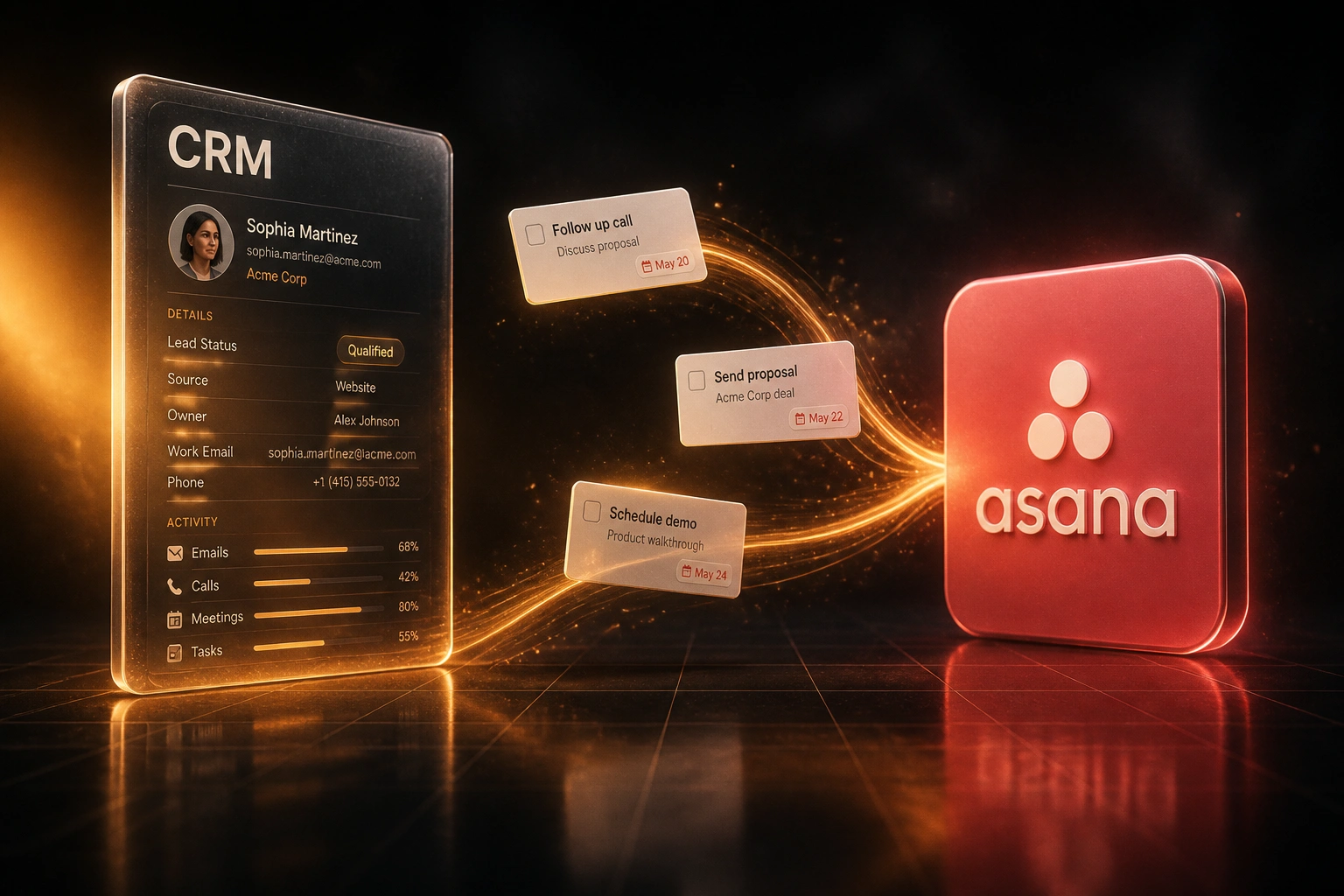
We integrate Asana, Monday.com, ClickUp, or Jira with your CRM so the whole team sees who is doing what and when.
Sound Familiar?
These are the exact issues team leads and ops managers face before a proper task management system:
- Work lives in WhatsApp threads, email chains, sticky notes, and mental to-do lists
- Nobody can answer "who owns this?" without pinging three people first
- Deadlines slip silently because there is no shared due-date view
- Managers spend their mornings chasing status instead of directing work
- CRM deals close, but follow-up tasks never land with a named owner
Hybrid work made informal tracking opaque. Asana's State of Work research found 59% of workers are hybrid or have the option to be. Once a team passes roughly a dozen people across locations, WhatsApp and mental lists stop being a system. Status becomes a meeting tax, and missed deadlines stop being visible until a client asks.
What Team Task Tracking Actually Looks Like
Work arrives → a named owner and due date appear → status stays visible → managers stop chasing.
Work Arrives
Deal stage change, form submit, or client email triggers the workflow
Tasks Created
Asana, Monday.com, ClickUp, or Jira gets cards with owners, due dates, and CRM context
Status Syncs Back
Progress and blockers write to the CRM deal so sales and ops share one view
Visibility Without Chase
Boards and digests replace status meetings; overdue work escalates automatically
Everything You Need for Reliable Team Task Tracking
Shared Task Board as Source of Truth
Every piece of work gets an owner, a due date, and a status visible to the whole team in Asana, Monday.com, ClickUp, or Jira.
CRM-Triggered Task Creation
A deal moves stage or a form lands → the right project and tasks appear automatically, with contacts and context already attached.
Email and Form Capture
Client requests and internal asks stop vanishing in inboxes. They become tracked tasks with assignees and SLAs.
Status Visibility Without Meetings
Live boards and scheduled digests replace the Monday morning "where are we?" call. Managers see blockers before they escalate.
Escalations and Stale-Work Alerts
Overdue tasks and idle cards ping the owner and the lead. Silent deadline slip becomes an exception, not the norm.
Bidirectional CRM Sync
Task completion and project health write back to the CRM deal or contact, so sales and ops share one picture of progress.
Platforms We've Connected for Team Task Tracking
From 10 Hours/Week Chasing Status to 90 Minutes
How an 18-person professional services firm replaced WhatsApp and sticky notes with a CRM-synced task management system.
The Informal Process
- Ops lead scrolled three WhatsApp groups and two inboxes every morning for status
- Work assigned verbally or in chat, with no shared due-date view
- Three standing status meetings a week just to reconstruct ownership
- Client follow-ups after Closed Won often sat for days with no named owner
- Deadlines only surfaced when someone escalated or a deliverable was late
The Shared System
- Won deals and intake forms spawn Asana projects with owners and milestones
- Every card has an assignee and due date visible on one board
- Weekly status meetings cut to a 30-minute board review
- Overdue and stale tasks escalate to the lead automatically
- CRM deals show delivery progress without pinging ops
Before vs After a Shared Task Management System
How It Works
From first conversation to a live task management system in 2–4 weeks.
Tell Us Your Setup
Which task tool (or none yet), how work arrives today, and where status gets lost.
Free Scoping Call
30-minute call to map ownership rules, CRM triggers, and the board structure your team will actually use.
Build & Test
We wire CRM, email, and your task management system, then run parallel for a week so nothing falls through.
Go Live & Monitor
Switch off WhatsApp chasing. Alerts and digests keep visibility high without adding meetings.
Frequently Asked Questions
Do we need Asana, Monday.com, or ClickUp already, or can you help us choose?
Either works. Many clients already have licences sitting idle. Others are still on spreadsheets and WhatsApp. We help you pick a task management system that fits team size and workflow, then integrate it with CRM and email so it becomes the shared source of truth.
How long does a team task tracking integration take?
A focused CRM-to-board sync is usually live in 2–4 weeks. Broader setups with email capture, escalations, and multi-project templates take closer to 4–6 weeks from scoping to go-live.
Will this disrupt how our team works today?
We design around the way you already operate. People keep using email and CRM; the automation creates and updates tasks behind the scenes. We run parallel for a week before switching off the informal chase.
What if some people refuse to leave WhatsApp?
That is normal at first. The win is that work still gets a named owner and due date in the task board, even if the conversation started on WhatsApp. Leads get visibility from the board, not from scrolling group chats.
Can tasks sync both ways with our CRM?
Yes. Deals and contacts can spawn project templates with owners and milestones, and completed tasks or blocked work can write status back to the CRM so sales and ops stop working from different lists.
How much does a task management system integration cost?
Simple one-way task creation from CRM or forms starts from around R15,000. Bidirectional setups with escalations, digests, and custom field mapping typically range from R25,000 to R55,000. Most teams chasing status 8+ hours a week see payback within 2–3 months.
Stop Chasing Status. Start Owning Delivery.
If your team still runs on WhatsApp, email, and mental lists, you are paying a weekly tax that a proper task management system already solves.
Tell us which tools you use today, how work arrives, and where status gets lost. We will show you how a shared board synced to CRM would look for your team.