University Research Grant Management: Track Funding and Compliance
Grant budgets sit in finance ERP, researcher time lives in HR, and the research office still runs a third ledger in spreadsheets. Funder reports go out late, auditors find dual books, and PIs lose hours to admin instead of research.
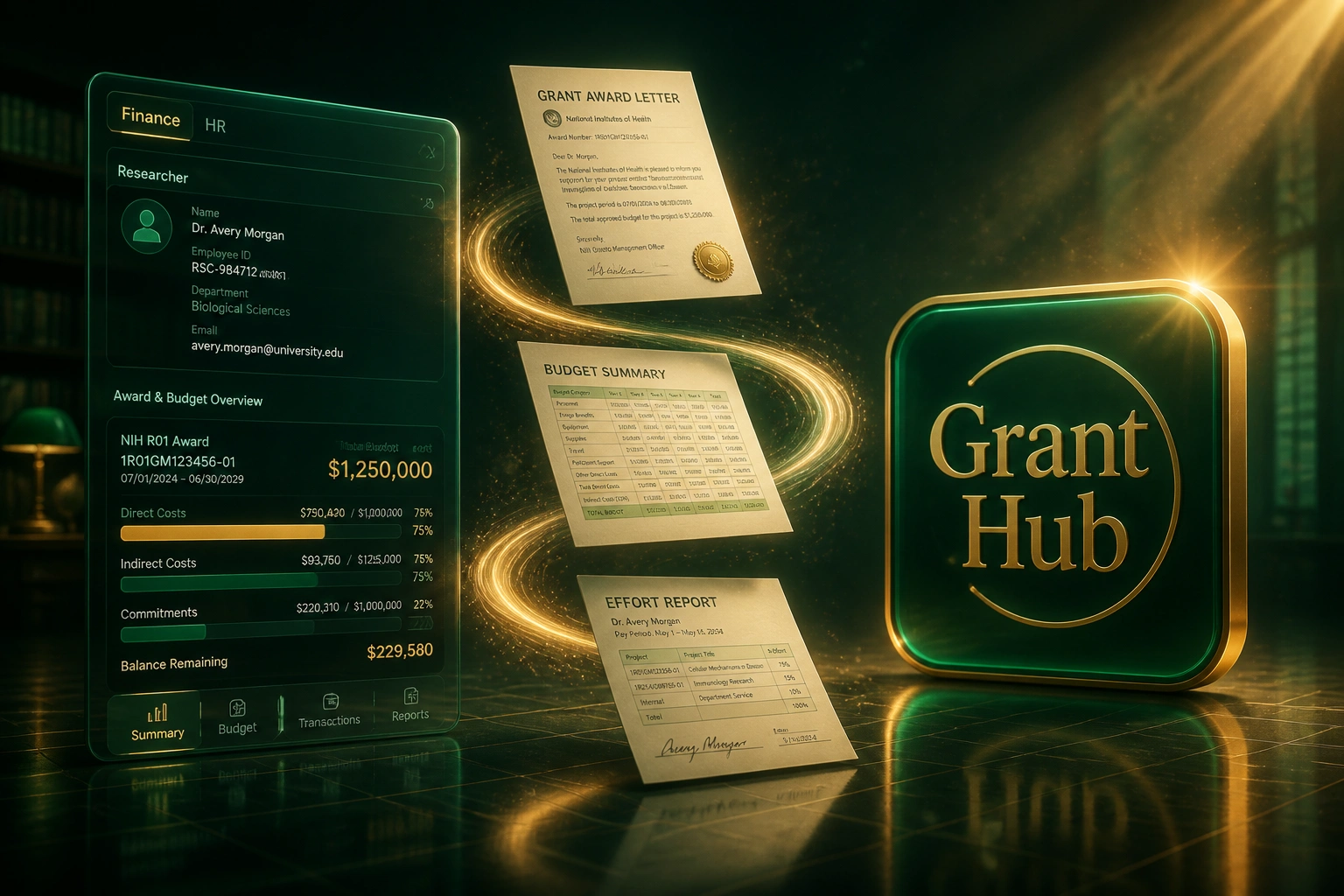
We build one research grant management layer that syncs awards, budgets, time allocation, and funder reporting into finance and HR.
Sound Familiar?
These are the exact issues research offices and university finance teams faced before integration:
- Grant budgets live in finance ERP, research office spreadsheets, and PI desktop files that never quite match
- Researcher time allocation is rebuilt from HR timesheets for every NRF, MRC, or NIH-style effort report
- Funder progress and financial reports scramble the research office for weeks before portal deadlines
- College accountants and grant administrators chase each other to reconcile commitments versus paid expenditure
- Dual ledgers between the research office and finance create audit findings and clawback risk
NRF bases future funding on audited financial reports, and campuses such as the University of Pretoria warn that late or incorrect packs risk forfeiture. Multi-year awards need yearly progress reports on NRF Connect before further tranches release. Commitments that are not yet paid can invalidate claims. Dual ledgers between research office and finance turn every portal deadline into an audit finding waiting to happen.
What Research Grant Tracking Actually Does
Award accepted → budget and effort synced → funder pack ready. No third ledger in Excel.
Award Lands
NRF, MRC, or international award accepted; cost centre opens with mapped budget lines
Finance & HR Sync
Spend posts to the ERP; researcher time allocation pulls from HR costing
Effort Certified
PI or supervisor reviews percentages that already sum to 100%, then signs
Funder Pack Ready
Progress and paid-expenditure extracts assemble weeks ahead of portal deadlines
Everything You Need for Research Compliance Sync
Award & Budget Sync
NRF, MRC, NIH-style, and foundation awards open cost centres in finance with line budgets, start dates, and funder rules already mapped.
Researcher Time Allocation
HR timesheets and payroll costing feed effort percentages per award, so certification is a review, not a rebuild from scratch.
Funder Report Packs
Progress and financial extracts assemble from live ledger and effort data for NRF Connect, MRC, and international sponsor portals.
Paid-Only Expenditure Rules
Commitments and open purchase orders stay out of claim packs where funders only accept actual paid expenditure, cutting forfeiture risk.
Cost Centre & Chart Mapping
Award codes map to the right ERP cost centres, account codes, and college ledgers your research accountants already use.
Compliance Control Tower
Carry-forward windows, audit pack status, and late-certification alerts sit in one view for the research office and finance.
Systems We've Connected for Research Grant Tracking
From 18 Days of Report Prep to 4
How a research-intensive South African university stopped dual-ledger grant tracking and protected multi-year NRF and MRC funding release.
The Manual Process
- Research office kept award budgets in Excel while finance owned the ERP cost centres
- College accountants rebuilt paid-versus-committed spend before every NRF financial pack
- Effort percentages were reconstructed from HR exports for each PI with multiple awards
- Average 18 working days from year-end close to portal-ready progress and finance files
- Carry-forward motivations queued late because commitment evidence lived in email threads
The Integrated Process
- Awards open once and sync budget lines into the institutional finance ERP
- Paid expenditure feeds funder packs; open POs stay flagged as commitments only
- Researcher time allocation reviews against HR costing, then certifies in one pass
- Progress and financial extracts ready in about 4 working days for research office review
- Carry-forward evidence and deadline alerts sit beside the live award balance
Before vs After Research Grant Integration
How It Works
From first conversation to live grant sync in 4–8 weeks, timed around your next funder window.
Tell Us Your Setup
Which finance ERP and HR system you run, how awards open today, and which funder reports burn the most research-office time.
Free Scoping Call
30-minute call with research office and finance to map award intake, effort rules, and the next NRF or MRC reporting window.
Build & Test
We wire awards, budgets, and time allocation, then run parallel against your last accepted funder pack until both offices sign off.
Go Live & Monitor
Switch off the shadow ledgers. Monitoring keeps carry-forwards, effort deadlines, and report packs visible weeks ahead.
Frequently Asked Questions
How is this different from SETA mandatory grant reporting?
SETA WSP and ATR cycles track workplace skills spend for employers. University research grant management tracks competitive awards from NRF, MRC, NIH-style sponsors, and foundations: cost centres, researcher effort, paid expenditure, carry-forwards, and funder portal reports. The systems, deadlines, and stakeholders are different.
Which finance and HR systems can you connect?
We have shaped grant syncs around Oracle Finance, SAP, ITS Integrator, PeopleSoft, Banner, and campus HR or payroll platforms. If your research office already opens cost centres in the institutional ERP, we map awards, budgets, and effort into that ledger rather than replacing it.
Will this replace our research office or college accountants?
No. The DVC Research, research office directors, and college accountants still own award acceptance, funder judgment calls, and audit liaison. We remove the dual-ledger retyping and spreadsheet rebuilds so specialists review exception lists and certify effort instead of reconstructing budgets by hand.
How do you handle NRF and MRC reporting deadlines?
NRF annual progress and financial reporting drives multi-year funding release, and the University of Pretoria and peer campuses treat audited NRF packs as a forfeiture risk if late or incorrect. We assemble paid-expenditure extracts and progress data from live systems so your team reviews and submits on NRF Connect or MRC channels, rather than rebuilding from shadow Excel the week before the portal closes.
What about effort reporting and researcher time allocation?
Federal Demonstration Partnership surveys show principal investigators spend about 44% of research time on administrative requirements, including effort and budget work. We pull allocation percentages from HR and payroll costing into award records so certification is after-the-fact review against a single source, not a separate spreadsheet exercise for every award.
How much does research grant management integration cost?
A focused award-to-finance sync typically starts from around R45,000. Builds with bidirectional effort allocation, multi-funder report packs, and compliance alerting usually sit in the R65,000–R120,000 range. Campuses recovering even half a research-finance FTE at loaded specialist rates near R650,000–R1.1 million a year typically see payback inside one NRF reporting cycle.
Stop Running Three Ledgers for One Award
If your research office, finance ERP, and HR timesheets still disagree on the same grant, you are paying for a problem universities have already solved with a single sync layer.
Tell us which ERP and HR systems you run, how awards open today, and which NRF, MRC, or international reporting window is next. We will show you exactly how research grant management integration would work for your campus.