World-Check Batch Screening: Process Thousands of Records Overnight
Periodic rescreening of the whole client book is mandatory for good control. Manual bulk checks are impossible at scale. Your compliance ops team should not need a multi-week project every time sanctions and PEP lists move.
We automate overnight World-Check batch screening with an exception queue ready each morning.
Sound Familiar?
These are the exact issues compliance ops leads and MLROs brought us before overnight batch automation:
- Full-book World-Check rescreening is treated as an annual project, then slips for months
- Analysts spend weeks checking names one by one while the rest of the book stays stale
- Thousands of clients have never been rescreened since onboarding
- List updates land several times a week, but there is no practical way to re-run the whole book
- Exception review is buried in spreadsheets with no clean morning hit list or audit trail
List updates, regulatory reviews, and never-rescreened backlogs do not wait for your next annual project. FIC expects screening when TFS lists change and at RMCP-defined intervals. If your last full-book World-Check bulk pass was months ago, the exposure window is already open.
What Overnight Batch Screening Actually Does
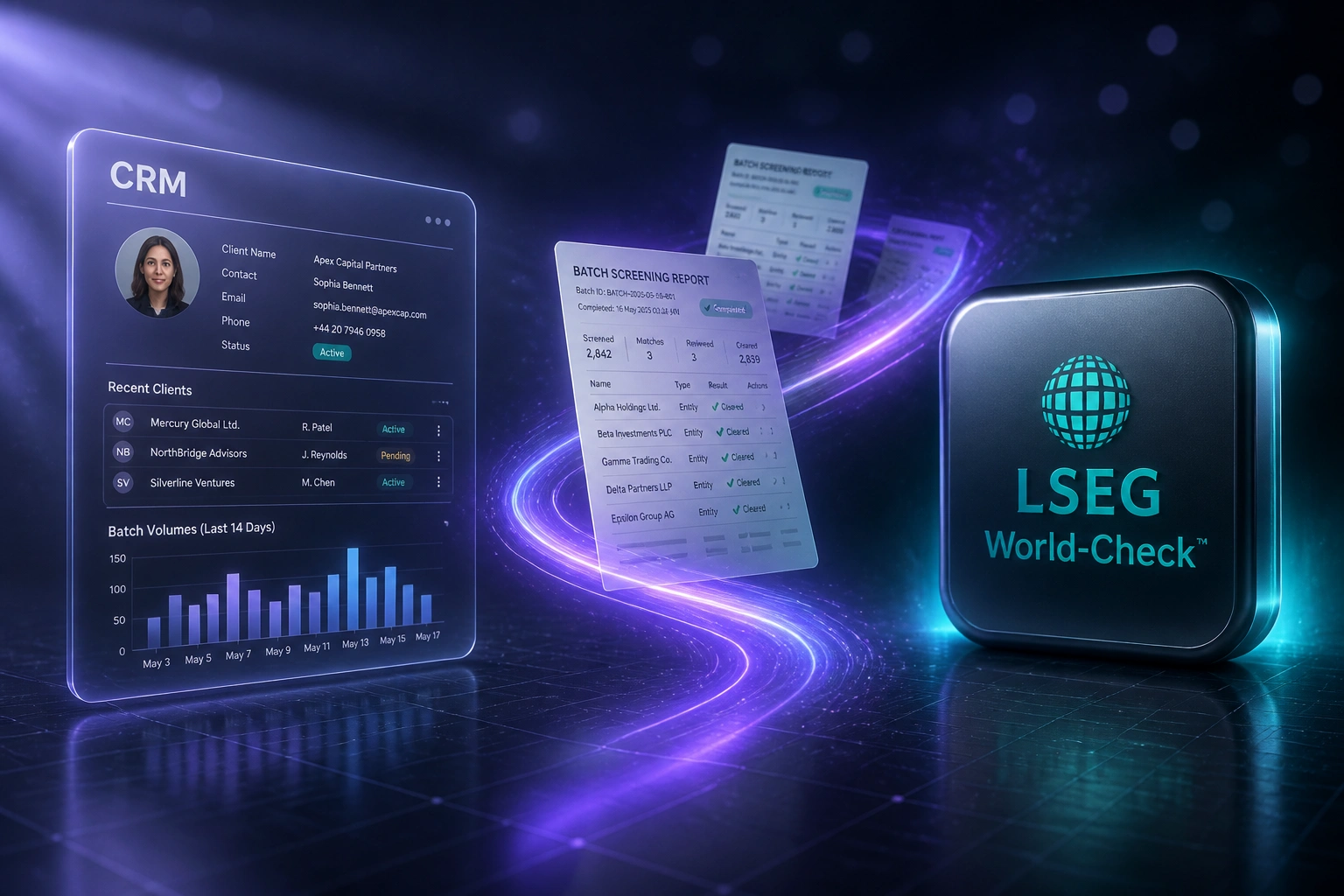
Client book extracted → World-Check bulk run overnight → exceptions queued → morning hit list. No multi-week manual project.
Book Extracted at Close of Day
Active clients pull from CRM or core systems with IDs and secondary identifiers
World-Check Batch Runs Overnight
Thousands of records screened against sanctions and PEP lists while the team sleeps
Exceptions Queued for Review
Clears auto-file; unresolved matches land in a prioritised morning worklist
Audit Trail Locked
Every overnight screening run is logged for FIC, FSCA, and internal audit
Everything You Need for Reliable Sanctions Batch Processing
Scheduled Overnight Batches
Pull your full client book from the CRM or core system and run World-Check bulk screening on a nightly schedule, without manual uploads.
Exception-Only Morning Queues
Clear matches auto-file. Your team wakes up to a prioritised hit list of unresolved matches, not thousands of cleared rows.
CRM and Core System Feeds
Client names, IDs, dates of birth, and entity details flow from HubSpot, Salesforce, or your policy admin system into each batch run.
Risk-Tiered Screening Rules
High-risk and PEP cohorts can run nightly; lower-risk segments weekly or monthly, matching the intervals in your RMCP.
Audit-Ready Batch Logs
Every overnight screening run stores who was screened, against which lists, and how exceptions were resolved, ready for FIC or FSCA inspection.
Backlog Catch-Up Mode
First go-live can process the never-rescreened portion of the book in controlled overnight waves until the whole portfolio is current.
Systems We've Fed into World-Check Batch Runs
From an 11-Week Project to an Overnight Job
How a mid-size South African insurer turned full-book World-Check rescreening into a nightly batch with a morning exception list.
The Manual Project
- 8,200 active policyholders sat in the CRM and policy admin system
- Two analysts worked a planned annual World-Check bulk pass for 11 weeks
- Only the priority ~3,000 clients finished; the rest stayed in a never-rescreened backlog
- List updates arrived several times a week with no practical full-book re-run
- Exception notes lived in shared spreadsheets with uneven audit trails
The Overnight Batch
- Entire 8,200-client book extracts each evening into a World-Check batch run
- Cleared records auto-file; unresolved matches open as a morning hit list
- Catch-up waves cleared the never-rescreened backlog in the first fortnight
- Risk-tier rules keep high-risk cohorts on a nightly cadence
- Every overnight screening run is logged for inspection
Before vs After World-Check Bulk Automation
How It Works
From first conversation to live overnight screening in 3–5 weeks.
Map Your Book
Client volumes, risk tiers, current World-Check licence, and where source data lives today.
Free Scoping Call
30-minute call to design overnight batch windows, exception ownership, and RMCP-aligned frequency.
Build & Parallel Run
We build the feed, batch job, and exception queue, then run parallel against a sample of your book.
Go Live & Monitor
Switch off the manual project scramble. Nightly runs and morning alerts keep the book current.
Frequently Asked Questions
How is batch screening different from real-time or ongoing monitoring?
Real-time screening checks one client at the moment of onboarding or a transaction. Ongoing monitoring watches existing cases for list updates. World-Check batch screening processes thousands of records in a scheduled run, typically overnight, so your whole client book is periodically rescreened and exceptions land as a morning review queue. Most MLROs need all three patterns; this page is specifically about bulk overnight coverage of the book.
How long does a World-Check batch screening integration take to set up?
A standard overnight batch with CRM extract and exception queue usually takes 3–5 weeks from scoping to go-live. Catch-up runs for a large never-rescreened backlog can add a short parallel phase, but the recurring nightly job is live within that window.
Will this replace our World-Check One licences or Case Manager?
No. We integrate with the World-Check One capabilities you already licence, including batch screening and case management. Your analysts still resolve true matches in the workflows your compliance policy requires. We automate the feed, the schedule, and the exception routing.
How do you handle false positives at scale?
Calibrated batch runs typically produce far fewer alerts than unfiltered name searches. Secondary identifiers (date of birth, ID number, country) reduce noise, and auto-resolve rules clear obvious non-matches. Your team only works the residual exception queue each morning.
Does overnight batch screening meet FICA periodic rescreening expectations?
FIC guidance (including PCC 53) expects accountable institutions to screen at onboarding, when targeted financial sanctions lists update, and at risk-based intervals documented in the RMCP. Automated overnight World-Check bulk screening gives you a defensible, auditable way to hit those intervals across thousands of clients, which manual projects cannot sustain.
How much does World-Check batch screening automation cost?
Projects of this scope typically range from R45,000 to R95,000 depending on source systems, risk-tier rules, and exception workflow depth. Against a multi-week manual rescreen costing hundreds of thousands of rand in analyst time, most clients see payback inside one or two full-book cycles.
Stop Treating Full-Book Screening as a Multi-Week Project
If your team still runs World-Check bulk checks by hand, you are spending analyst months on work that should finish overnight and land as a morning exception queue.
Tell us how large the client book is, which systems hold the records, and how you handle exceptions today. We will show you exactly how overnight World-Check batch screening would work for your compliance ops team.