World-Check CRM Integration: Screen Clients Without Leaving Your CRM
When World-Check lives outside HubSpot or Salesforce, sales retypes contacts, deals stall waiting for a spreadsheet, and some clients never get screened. Sales and compliance should not need two systems for one onboarding decision.
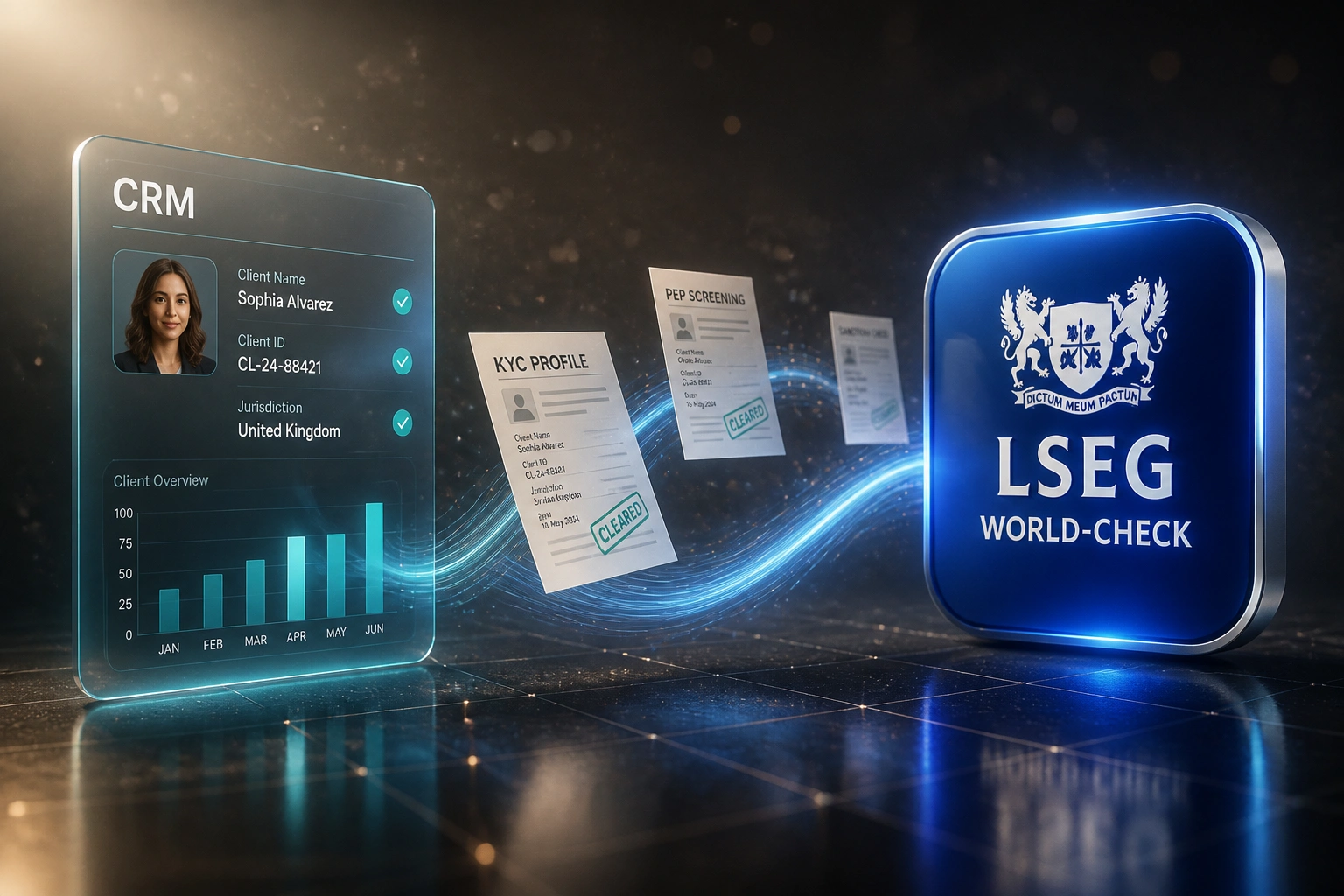
We embed World-Check screening at create and update, with status sync-back so everyone works from the CRM.
Sound Familiar?
These are the exact issues our FSCA-regulated clients faced before CRM compliance integration:
- Sales creates contacts in HubSpot or Salesforce, then retypes the same details into a World-Check portal
- Deals stall for days while compliance screens offline and emails a spreadsheet back
- Friday contacts never reach Monday's screening list, so some clients skip checks entirely
- Sales and compliance argue over status because Clear, Review, and Blocked live outside the CRM
- POPIA risk climbs every time personal data hops between the CRM and a separate screening tool
FSCA FICA inspections intensified through 2024/25. Your RMCP must state how and when sanctions screening happens at take-on, and inspectors expect evidence on the client file, not a portal login history sales never sees. Spreadsheet handoffs and contacts that skip screening are exactly the gaps examiners flag.
What Embedded World-Check CRM Screening Actually Does
Contact created → World-Check runs → status syncs back → sales keeps moving. No portal dual entry.
Contact Created in CRM
Sales adds a contact, company, or deal party in HubSpot, Salesforce, Dynamics, or Pipedrive
World-Check Screens
Sanctions and PEP screening runs automatically against the identity fields on the record
Status Syncs Back
Clear, Review Needed, or Blocked updates on the CRM record for sales and compliance to see
Deals Move or Pause
Clean clients proceed. Matches route to compliance with evidence already on the file
Everything You Need for In-CRM World-Check Screening
Screen at Create and Update
New contacts, companies, and deal parties trigger World-Check screening the moment they land in the CRM. Updates re-screen when identity fields change.
Status Sync-Back to the Record
Clear, Potential Match, and Blocked write back to CRM fields your sales and compliance teams already open. No spreadsheet handoffs.
Sales Never Leaves the CRM
Reps see screening status on the contact or deal. They keep selling in HubSpot, Salesforce, Dynamics, or Pipedrive while compliance owns exceptions.
Exception Queue for Compliance
Only potential matches pause progression. Your MLRO reviews World-Check evidence against the CRM record, with decisions timestamped for FICA audits.
Deal-Stage Gates
Optional stage locks stop a deal advancing until screening is Clear. Risky parties are caught before proposals, mandates, or account opening.
Audit Trail on the Client File
Every screen, match decision, and remediation note sits on the CRM record. Inspection evidence is one export away, not a reconstruction exercise.
CRMs We've Wired to World-Check
From 4-Day Screening Stalls to Same-Day Clears
How a Johannesburg FSCA-licensed advice firm stopped dual entry between HubSpot and World-Check and recovered 350+ hours a year.
The Manual Handoff
- Sales created contacts in HubSpot, then emailed a weekly spreadsheet to compliance
- Compliance retyped names into the World-Check portal and emailed results back
- Average 4 business days from contact create to Clear status on the deal
- Friday contacts often missed Monday's list and went unscreened until someone noticed
- Sales had no live view of screening status without chasing compliance
The Embedded Process
- Contact create or identity update triggers World-Check inside HubSpot
- Clear, Review Needed, or Blocked writes back to the contact and deal in seconds
- Sales never opens the portal; compliance only touches potential matches
- Same-day clears for clean clients; stage gate blocks risky parties before mandate
- Every screen and decision sits on the CRM file for FSCA inspection evidence
Before vs After CRM Compliance Integration
How It Works
From first conversation to live in-CRM screening in 3–5 weeks.
Tell Us Your Setup
Which CRM sales lives in, how World-Check is used today, and where dual entry or stalled deals hurt most.
Free Scoping Call
30-minute call to map create/update triggers, status fields, stage gates, and how exceptions escalate to compliance.
Build & Test
We embed World-Check in your CRM workflow, test with real contacts, and validate sync-back and false-positive handling with your MLRO.
Go Live & Monitor
Switch off portal dual entry and spreadsheet handoffs. Monitoring keeps screening reliable as deal volume grows.
Frequently Asked Questions
How long does a World-Check CRM screening integration take?
A standard HubSpot or Salesforce embed with create/update triggers and status sync-back takes 3–5 weeks from scoping to go-live. Simpler one-CRM setups can be live in about 2 weeks. Multi-object workflows with deal-stage gates and custom exception queues take closer to 5–7 weeks.
Do we already need a World-Check licence?
Yes. LSEG World-Check One licensing and API access are sold separately by LSEG based on screening volume. We build the CRM-side integration once licensing is in place, or in parallel with your LSEG account manager. Salesforce also has an LSEG Customer Risk Screener app; we extend beyond that for HubSpot, Dynamics, Pipedrive, and custom logic.
Will sales still need to open the World-Check portal?
No for day-to-day work. Screening runs inside the CRM at create and update. Sales sees status on the record. Compliance reviews potential matches with World-Check detail attached. Portal logins become the exception path, not the daily workflow.
How does this help with FSCA and FICA inspections?
FIC PCC 44A and FSCA FICA inspections expect you to show when and how sanctions screening happened at take-on, with evidence retained. Embedding World-Check in the CRM ties every screen to the client file and timestamps decisions, so your RMCP process matches what actually happens in sales.
What about POPIA when data moves between systems?
Fewer systems touch personal information when screening runs inside the CRM you already use for sales. That reduces dual storage, spreadsheet exports, and email attachments of ID details. We design the integration so only the fields World-Check needs leave the CRM, with access limited to compliance roles.
How much does World-Check CRM integration cost?
Focused create/update screening with status sync-back typically starts from around R30,000. Bidirectional workflows with deal-stage gates and custom exception queues usually sit in the R45,000–R80,000 range. Most FSCA firms screening 20+ new contacts a week recover the build cost within 2–4 months from dual-entry time and faster deal clears alone.
Stop Making Sales Leave the CRM for World-Check
If your sales and compliance teams still copy contacts into a screening portal and chase status by email, you are paying for dual entry, stalled deals, and FICA gaps every week.
Tell us which CRM you use, how World-Check runs today, and where onboarding stalls. We will show you exactly how embedded screening would work for your FSCA-regulated workflow.